Preventing HVAC Water Damage: A South Florida Homeowner’s Preventing Water Damage Guide
Quick Answer: How to Prevent Water Damage From Your AC
Preventing water damage from your AC starts with keeping airflow, condensate drainage, drain pans, humidity control, and shutoff protections working before moisture reaches ceilings, walls, flooring, or electrical areas. In South Florida, where air conditioners run hard for much of the year, prevention is much easier than cleanup.
Your AC does more than cool the air. During normal operation, it also removes indoor humidity as warm air passes over the cold evaporator coil. That moisture becomes condensate, collects in a pan, and should drain safely away from the home. When that path is blocked or the system cannot manage humidity properly, water can back up into places it does not belong.
Use this quick prevention checklist as your starting point:
- Inspect or change air filters regularly so airflow is not restricted.
- Keep supply vents and return grilles open and clear of furniture, rugs, curtains, and storage.
- Look around the indoor air handler for rust, dampness, stains, musty smells, or standing water.
- Confirm the outdoor condensate drain outlet is open and not buried by mulch, algae, leaves, dirt, or landscaping.
- Watch indoor humidity readings if you have a thermostat or monitor that displays humidity.
- Schedule routine HVAC maintenance before peak cooling demand, especially if your air handler is in an attic, closet, or above a finished ceiling.
- Consider overflow protection such as a float switch, secondary drain pan, or leak detector in higher-risk locations.
This is a prevention guide, not a troubleshooting guide for an active air conditioner water leak. If water is already visible around the indoor unit, near electrical components, in the ceiling, or on flooring below the air handler, shut the system off if it is safe to do so and call for professional service.
South Florida homes face special risk because of long cooling seasons, high humidity, heavy AC runtime, storm-season interruptions, and air handlers often installed in closets, garages, attics, or tight utility spaces. That makes condensate drain maintenance one of the most important home water damage tips for homeowners in Boynton Beach, West Palm Beach, and surrounding Palm Beach County communities.
Why HVAC Water Damage Happens in Florida Homes
HVAC water damage usually happens when normal AC condensation cannot drain away, airflow is restricted, humidity is excessive, or safety devices fail to stop overflow before moisture spreads into the home. In Florida, the combination of heat, humidity, and constant cooling demand makes small drainage issues turn into expensive moisture problems quickly.
Here is the simple version of how your AC handles moisture. Warm, humid indoor air is pulled through the return side of the system. That air passes over the cold evaporator coil. Moisture in the air condenses on the coil, similar to water forming on the outside of a cold glass. The water drips into a drain pan, moves into the condensate drain line, and exits outside or into an approved drainage location.
When everything is clean, sloped properly, and draining freely, you may never notice this process. When the drain line clogs, the pan rusts, the outlet is blocked, or the air handler is not protected by working overflow controls, the same normal condensation can become an air conditioner water leak.
Florida conditions increase the load on that drainage system. Your AC may run for many hours a day during hot, humid weather. Each cooling cycle can produce condensate. The more often the system runs, the more important it becomes for the drain pan and line to stay clear.
Common South Florida risk factors include:
- Long cooling seasons that keep condensate lines wet for much of the year.
- High indoor humidity that increases the amount of moisture the AC must remove.
- Storm-season power interruptions that can disrupt normal operation and leave homes humid while residents are away.
- Frequent AC runtime that gives algae and buildup more opportunity to form in drain lines.
- Attic air handlers where a leak can damage insulation, ceilings, drywall, light fixtures, and flooring below.
- Closet or garage units where leaks may go unnoticed until baseboards, flooring, or stored belongings are wet.
- Air handlers above finished ceilings where even a small overflow can create visible stains or hidden mold-friendly moisture.
Airflow problems can also contribute to moisture issues. A clogged filter, dirty evaporator coil, blocked return, or closed supply vents can reduce system performance and interfere with proper humidity removal. Poor airflow may also contribute to coil problems, longer runtimes, and comfort complaints such as clammy rooms or uneven cooling.
Preventing water damage is not only about the drain line. It is about the entire cooling system working as designed: clean filter, clean coil, clear drain, sound pan, proper system operation, and working safety controls.
Your AC Water Damage Prevention Checklist for South Florida
Preventing water damage is easiest when homeowners use monthly visual checks, pre-summer maintenance, storm-season precautions, and post-vacation inspections instead of waiting for stains, odors, or standing water. A few minutes of prevention can help protect ceilings, walls, flooring, electrical areas, and indoor air quality.
Monthly Homeowner Checks
Once a month during heavy cooling season, take a few minutes to check the parts of your system you can safely see. You do not need to open sealed equipment panels or handle electrical components. The goal is to spot early signs before they become an AC water damage problem.
- Inspect or replace the air filter. A dirty filter restricts airflow and can make the system work harder than necessary.
- Look around the indoor air handler. Check the floor, walls, ceiling, platform, or closet base for water stains, rust, dampness, or algae buildup.
- Smell for musty odors. A musty smell near the unit or from vents can be a clue that moisture is lingering somewhere.
- Keep the air handler area clear. Do not stack boxes, cleaning supplies, clothing, or holiday storage tight against the unit.
- Check supply and return vents. Make sure vents are open and not blocked by furniture, rugs, curtains, or dust buildup.
- Look at the outdoor drain outlet. If accessible, confirm it is not blocked by mulch, soil, algae, insects, leaves, or landscaping material.
- Watch thermostat humidity readings. If your thermostat displays humidity and it stays unusually high, the system may need attention.
Before Peak Cooling Season
Before the hottest, most humid months arrive, schedule professional HVAC maintenance. In South Florida, this is not just about comfort. It is a practical step for preventing water damage because your AC is about to enter its heaviest workload of the year.
During a maintenance visit, ask the technician to focus on moisture management as well as cooling performance. Important items include:
- Confirming the condensate drain line is clear and draining properly.
- Inspecting the primary drain pan for rust, cracks, standing water, or biological buildup.
- Checking the secondary drain pan if the unit is installed above finished space.
- Testing the float switch so the system shuts down if water rises where it should not.
- Evaluating coil condition because dirty coils can affect cooling and humidity removal.
- Checking the drain line slope and connections where accessible.
- Reviewing indoor humidity control and thermostat settings.
Filter replacement intervals vary based on filter type, pets, dust, occupancy, and runtime. In a South Florida home where the AC runs frequently, it is wise to inspect the filter monthly and replace it when dirty, even if the package suggests a longer interval.
Before Leaving Town
Many AC-related water damage claims happen while homeowners are away. In humid weather, shutting the system off completely can allow humidity to rise, while an unnoticed drain backup can continue until someone returns.
Before a trip, use this short checklist:
- Set a reasonable thermostat temperature. Do not turn cooling off completely during humid South Florida weather.
- Check the air handler area. Look for any water, rust, stains, or musty smells before you leave.
- Replace a dirty filter. Do not start a vacation with restricted airflow.
- Make sure vents are open. Avoid closing off rooms in a way that disrupts airflow.
- Consider leak sensors. Place them near attic, closet, or garage air handlers where a small leak could spread unnoticed.
- Ask someone to check the home. If you will be gone during storm season, have a neighbor, property manager, or family member check for cooling and moisture issues.
After Returning Home
When you return, do a quick inspection before settling in. Look near the air handler, under ceiling areas below attic equipment, around baseboards, and near flooring transitions. If the home smells musty, feels clammy, or shows signs of new staining, do not ignore it. Moisture problems are easier to address when caught early.
Condensate Drain Maintenance Basics: Drain Lines, Pans, and Float Switches
Condensate drain maintenance keeps the AC drain pan, drain line, outlet, cleanout, and float switch clear and functional so normal moisture leaves the home instead of backing up into ceilings, walls, floors, or the air handler area. It is one of the most important preventive HVAC tasks in humid climates.
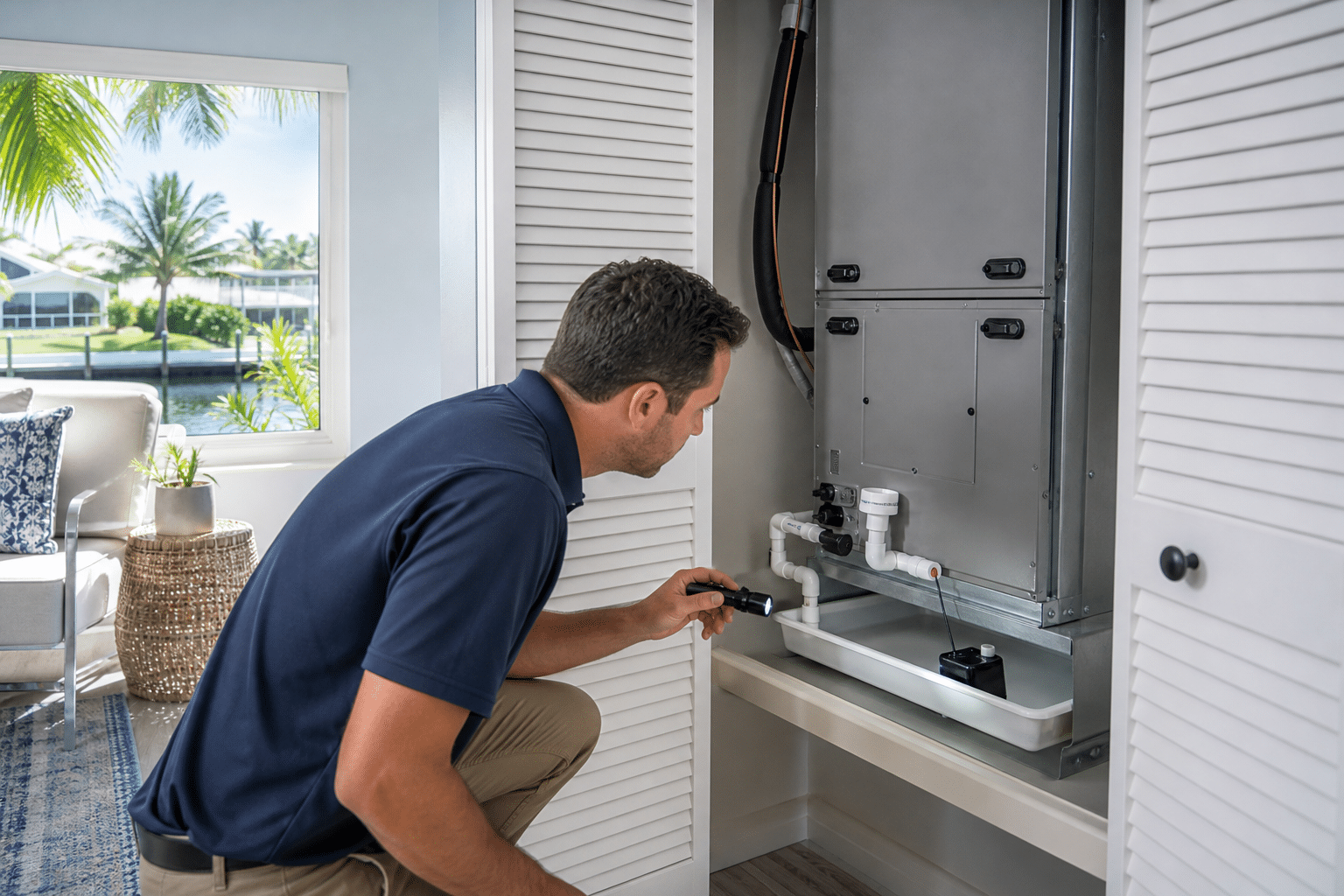
To understand why this matters, it helps to know the basic parts:
- Evaporator coil: The cold indoor coil that cools air and removes humidity during the cooling process.
- Primary drain pan: The pan that catches water dripping from the evaporator coil during normal operation.
- Condensate drain line: The pipe that carries water from the drain pan to an outdoor or approved drain location.
- Outdoor drain outlet: The visible end of the drain line, often located outside near the home.
- Secondary drain pan: An additional pan placed under certain air handlers, especially when equipment is above finished space.
- Cleanout access: A service access point that helps a technician clear or flush the drain line.
- Float switch: A safety device designed to shut off the system if water rises too high in the pan or drain area.
Homeowners can perform simple visual checks, but condensate drain maintenance should be handled carefully. Avoid opening electrical compartments, cutting drain lines, forcing tools into piping, or using chemicals that could damage components or create unsafe fumes.
DIY-safe prevention includes:
- Visually inspect accessible drain areas for moisture, slime, rust, stains, or standing water.
- Keep the outdoor drain outlet clear of mulch, algae, dirt, grass clippings, leaves, and pest nests.
- Keep storage away from the air handler so leaks are easier to spot and airflow is not restricted.
- Pay attention to unexpected AC shutdowns during humid weather, which may indicate a float switch is being triggered.
- Check for recurring musty smells around the unit or from supply vents.
Professional condensate drain maintenance may include:
- Flushing or clearing the drain line using proper HVAC service methods.
- Checking the drain pan condition for rust, cracks, poor fit, or signs of overflow.
- Confirming proper drainage and slope so water moves in the right direction.
- Testing float switch operation to verify it shuts the system down when needed.
- Inspecting evaporator coil condition because coil problems can contribute to moisture and performance issues.
- Identifying poor installation details such as missing cleanouts, poorly supported lines, or inadequate overflow protection.
- Recommending drain-line treatments when appropriate for the system and manufacturer guidance.
If your air handler is in an attic or above a finished ceiling, do not treat condensate maintenance as optional. A backed-up drain line in these locations can affect insulation, drywall, recessed lights, paint, flooring, furniture, and personal belongings below.
Early Warning Signs Your Prevention Plan Is Failing
Early signs of HVAC water damage include musty odors, ceiling stains, damp flooring, water near the air handler, rusted pans, repeated float switch shutdowns, and indoor humidity that stays high even when the AC is running. These signals should be addressed before moisture spreads or mold-friendly conditions develop.
Visible warning signs often appear near the indoor unit or below it. Watch for:
- Water near the indoor air handler in a closet, garage, attic, utility room, or mechanical platform.
- Ceiling stains below an attic air handler or above a hallway, bedroom, bathroom, or living area.
- Peeling paint or bubbling drywall near vents, ceilings, closets, or the air handler location.
- Warped flooring around the indoor unit or in rooms below attic equipment.
- Rust near the drain pan or on the air handler cabinet.
- Recurring dampness around a closet, garage, hallway, or equipment platform.
- Algae or slime at the drain outlet that may suggest buildup inside the line.
Comfort and air-quality clues matter too. Your home may be warning you before you see standing water.
- Musty smells when the AC starts or near the indoor unit.
- Clammy rooms even when the thermostat temperature looks normal.
- Higher indoor humidity that does not improve during normal cooling.
- Longer runtimes without better comfort.
- Rooms that feel warm despite the system running.
- Repeated system shutdowns that may be caused by a tripped float switch.
Some situations require immediate action. If you see water near electrical components, wiring, the indoor cabinet, ceiling fixtures, or outlets, do not continue running the system. Shut off the AC if it is safe to access the thermostat or breaker, protect belongings from the affected area, take photos for documentation, and call a professional.
Do not ignore a small leak because it appears to stop. A drain line may partially clear, a float switch may reset, or water may be soaking into hidden materials. Ceiling stains, swollen baseboards, damp drywall, and persistent odors deserve prompt attention.
When to Call for HVAC Water Damage Prevention Service in Boynton Beach or West Palm Beach
South Florida homeowners should schedule HVAC service when moisture recurs, the float switch trips, humidity stays high, drain backups appear, pans rust, ceiling stains form, or maintenance has been delayed. In Boynton Beach, West Palm Beach, and nearby Palm Beach County communities, prevention service is especially important before peak cooling and storm season.
Call now if you notice any of the following:
- Water near wiring or electrical areas around the indoor unit.
- Water around the air handler in a closet, garage, attic, or utility area.
- Ceiling staining below the AC equipment or below an attic installation.
- Repeated AC shutoff that may indicate a float switch is stopping the system.
- Clogged condensate drain symptoms such as standing water in the pan, algae buildup, or slow drainage.
- Rusted or damaged drain pans that may no longer hold water safely.
- Unexplained damp floors near the indoor unit or below the air handler location.
- Musty odors or high humidity that continue despite normal thermostat settings.
- Missed maintenance before the hottest, wettest months of the year.
BlueNest supports homeowners and property managers with HVAC maintenance, same-day repair, installation, and 24-hour emergency air conditioning service in Boynton Beach, West Palm Beach, Palm Beach County, and surrounding South Florida communities. If your goal is preventing water damage, a technician can inspect the condensate system, test safety controls, and identify weak points before they become an emergency.
Prevention tools worth discussing include:
- Float switches that help shut the AC down when water rises too high.
- Secondary drain pans for added protection under certain indoor units.
- Smart leak detectors that can alert you when moisture appears near the equipment.
- Drain-line cleanouts that make maintenance easier and more effective.
- Pan treatment tablets when appropriate for the system and used according to professional guidance.
- Routine maintenance agreements that keep drainage, airflow, and performance checks on schedule.
The right protection depends on your installation. An attic air handler above a finished living space may need a more aggressive prevention plan than a garage unit over a bare concrete floor. A rental property, seasonal home, or vacation property may also benefit from leak sensors and scheduled inspections because no one is there every day to catch early warning signs.
FAQ
How do I prevent water damage from my air conditioner?
Prevent AC water damage by keeping the air filter clean, maintaining clear airflow, checking the area around the indoor air handler, keeping the condensate drain outlet open, watching for musty smells or stains, and scheduling routine HVAC maintenance. In South Florida, condensate drain maintenance is especially important because AC systems remove large amounts of humidity.
How often should an AC condensate drain be maintained in Florida?
In Florida, the condensate drain should be checked regularly and professionally maintained at least during routine HVAC service. Many homes benefit from maintenance before peak cooling season, and higher-risk homes may need more frequent attention. Heavy runtime, attic air handlers, prior clogs, and high humidity can all increase the need for service.
What are the first signs of HVAC water damage?
The first signs often include musty odors, damp flooring, water near the indoor unit, rust around the drain pan, ceiling stains below an attic air handler, peeling paint, high indoor humidity, or repeated AC shutoffs. If you notice these signs, schedule service before moisture spreads into drywall, insulation, flooring, or electrical areas.
Can a clogged AC drain line cause ceiling or wall damage?
Yes. A clogged AC drain line can cause water to back up into the drain pan and overflow. If the air handler is in an attic, closet, or above finished space, that overflow can damage ceilings, walls, insulation, flooring, paint, and stored belongings.
Should I turn off my AC if I see water around the indoor unit?
Yes, if it is safe to do so. Turn off the AC at the thermostat, and avoid touching wet equipment or electrical areas. If water is near wiring, the air handler cabinet, ceiling fixtures, or outlets, use extra caution and call for professional HVAC service promptly.
Are float switches and leak detectors worth it for AC water damage prevention?
Yes, especially in South Florida homes with attic, closet, or above-ceiling air handlers. A float switch can help shut the system down when water rises too high, while a leak detector can alert you to moisture early. They do not replace maintenance, but they add valuable protection.
Final Takeaway
Preventing water damage from your HVAC system comes down to staying ahead of moisture. Keep airflow unrestricted, maintain the condensate drain, inspect pans and drain outlets, watch indoor humidity, and use overflow protection where it makes sense. If you see water, stains, rust, or repeated shutdowns, do not wait. In South Florida’s humid climate, a small AC drainage problem can become serious quickly.


Leave a reply