Florida Winter HVAC Tips Guide: Heat Pump Settings, Maintenance Checklist, and Mild-Weather Comfort Tips
Quick Florida Winter HVAC Checklist
Florida homeowners should test heat mode before cold fronts, keep filters clean, maintain open airflow, use steady thermostat settings, monitor indoor humidity, and schedule a professional HVAC system tune up if the system has not been checked recently. Winter is mild here, but quick changes can still expose HVAC problems.
A Florida winter HVAC plan is different from a northern winter plan. Your system may heat the home one morning, cool it the next afternoon, and manage humidity throughout the week. Heat pumps also tend to run in short heating cycles during mild weather, which can make small performance issues easy to miss until a sudden cold front arrives.
Quick-reference winter HVAC checklist
- Check or replace the air filter: Recommended monthly check; homeowner-safe. A clogged filter restricts airflow, makes heating and cooling less comfortable, and can worsen humidity control during Florida’s mild winter swings.
- Confirm supply and return vents are open: Check monthly and before cold fronts; homeowner-safe. Blocked vents can create uneven rooms, weak airflow, and unnecessary strain on the blower.
- Test heat mode before a cold front: Test at the start of winter and before forecasted cold snaps; homeowner-safe. This confirms the thermostat responds and the heat pump can deliver warm air before you need it.
- Clear the outdoor unit: Check after storms, lawn work, and leaf drop; homeowner-safe. Leaves, grass clippings, stored items, and storm debris reduce airflow around the unit.
- Watch indoor humidity: Check during warm, humid stretches and vacancies; homeowner-safe. Florida homes can still feel sticky or musty in winter if the AC never runs or airflow is poor.
- Listen for unusual operation: Check whenever the system changes modes; homeowner-safe. New grinding, buzzing, repeated clicking, or persistent rattling deserves attention.
- Electrical testing: Recommended during a professional tune up; pro-only. Capacitors, contactors, wiring, and controls should be inspected by a licensed HVAC technician.
- Refrigerant-side performance check: Recommended during professional service; pro-only. Refrigerant issues can affect both cooling and heat pump heating performance.
- Blower and heat mode performance check: Recommended during an HVAC system tune up; pro-only. A technician can evaluate airflow, temperature performance, and safe operation.
- Condensate drain inspection: Recommended during routine service and after moisture concerns; pro-only when clearing or diagnosing deeper drain problems. Florida systems still remove moisture in winter, especially on warm afternoons.
For homeowner-safe winter HVAC maintenance, focus on the basics: filters, airflow, thermostat settings, visible debris, and comfort changes. Avoid removing panels, handling wiring, pressure-washing the unit, adding refrigerant, or trying to diagnose electrical components. Those are technician tasks, even if the system appears simple from the outside.
Many manufacturers and utility-style maintenance guides advise checking HVAC filters regularly, often monthly, and cleaning or replacing them based on the filter type, home conditions, and system use. In Florida, that monthly habit is useful year-round because cooling season is long, pollen can be heavy, and winter humidity can still be a factor.
What Should You Set Your HVAC to in a Florida Winter?
In a Florida winter, set your HVAC to comfortable, steady temperatures instead of extreme setbacks. Use modest occupied, sleeping, away, and vacation settings based on humidity, occupancy, and heat pump performance. Avoid large swings, because heat pumps may recover slowly and can use more energy if auxiliary heat is triggered.
Suggested Florida winter thermostat settings
- Occupied heating: About 68 to 72 degrees for many homes. Choose the lowest comfortable setting when heating is needed.
- Sleeping heating: About 65 to 69 degrees if your household is comfortable with cooler nights and bedding provides warmth.
- Away heating: About 62 to 66 degrees for short absences, depending on pets, plants, occupants, and home conditions.
- Vacation heating: About 60 to 65 degrees when the home is vacant during cooler weather, unless property needs require a different setting.
- Warm-afternoon cooling: About 74 to 78 degrees when cooling is needed, adjusted for humidity, sun exposure, and personal comfort.
These ranges are starting points, not rules. A shaded concrete-block home, a sun-exposed townhouse, a coastal condo, and a short-term rental may all behave differently. If the home feels damp, stale, or musty, humidity control may matter as much as the number on the thermostat.
For heat pump maintenance and comfort, avoid repeatedly dropping the thermostat very low and then raising it high to “catch up.” Heat pumps are efficient when they operate steadily, but large temperature swings can create long recovery periods. In some systems, aggressive increases may activate auxiliary heat, which is often less efficient than normal heat pump operation.
Utility and energy-efficiency guidance commonly recommends practical thermostat scheduling rather than extreme setbacks, especially for heat pump homes. In Florida, small changes usually work better than dramatic ones because winter temperature swings are brief and the system may switch between heating and cooling within the same week.
Is 77 degrees too hot for a house in winter? In heating mode, 77 degrees may feel warm for many Florida homes and can overwork the system during a cold morning. As a cooling setpoint on a warm winter afternoon, however, 77 can be reasonable if humidity is controlled and the home feels comfortable.
Heat Pump Maintenance Before a Florida Cold Front
Before a Florida cold snap, heat pump maintenance should include testing heat mode early, replacing or cleaning filters, clearing the outdoor unit, confirming vents are open, listening for unusual operation, and avoiding unnecessary emergency heat use. A short test before the front arrives can prevent uncomfortable surprises.
Start with the thermostat. Switch the system from cooling or auto mode to heat mode, then raise the setpoint a few degrees above the current indoor temperature. Give the system several minutes to respond. You should feel warmer air at the supply vents, though heat pump air may not feel as hot as gas furnace air.
- Test heat mode before the weather changes: Do this on a mild day, not at midnight during the first cold snap. Confirm the system starts, runs smoothly, and responds to the thermostat.
- Verify warm airflow: Check a few supply vents. Air should feel gently warm and steady, not weak, cold, or barely moving.
- Check thermostat response: Make sure the thermostat shows the correct mode and that the indoor temperature begins moving toward the setpoint.
- Inspect the filter: Replace or clean it if it is dirty, clogged, or past its normal service interval.
- Confirm vents are open: Move rugs, furniture, storage bins, and curtains away from supply and return grilles.
- Look at the outdoor unit: Remove leaves, grass clippings, palm fronds, branches, and stored items around the unit.
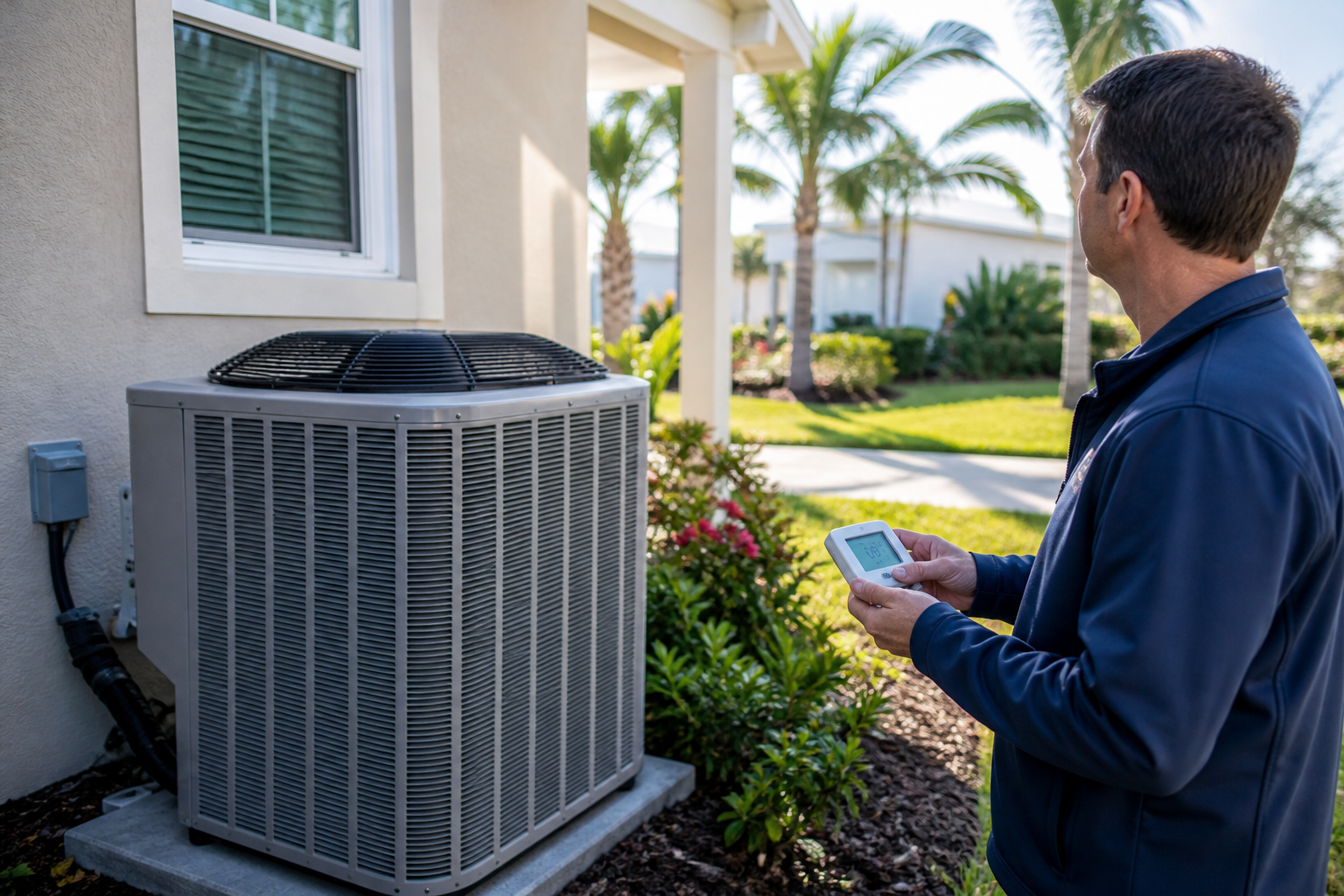
Outdoor unit care is especially important in Florida. Storm debris, landscaping growth, and coastal salt-air exposure can all affect the equipment. Keep the area around the outdoor unit clear, but do not remove panels, reach into the unit, handle electrical parts, or pressure-wash the coil. If the unit looks damaged, corroded, or unusually dirty, schedule service.
Some heat pump behavior is normal during colder, damp weather. The outdoor unit may briefly change sound during a defrost cycle. You may notice cooler-feeling air for a short period, steam-like vapor near the outdoor unit, or a temporary shift in operation. Those short changes are not automatically a problem.
Concerning signs include repeated loud noises, burning smells, weak airflow, frequent breaker trips, heat that never reaches the setpoint, or a system that cycles on and off rapidly. If you smell burning from the vents, see water where it should not be, or hear electrical buzzing, turn the system off and request repair service.
Air Conditioning Maintenance Florida Homeowners Still Need in Winter
Air conditioning maintenance Florida homeowners perform in winter should focus on airflow, filters, humidity awareness, and occasional warm-weather operation. Even in January or February, many homes still need cooling during sunny afternoons, humid stretches, rental turnovers, or periods when indoor air starts to feel stale.
Florida AC systems rarely get a true winter break. Sun-exposed homes can heat up quickly. Coastal properties may deal with moisture and salt air. Seasonal residences and rentals may sit closed for long periods. In those situations, turning the AC off completely can allow humidity, odors, and comfort problems to build.
Use this simple winter AC check:
- Check the filter monthly: Replace or clean it according to the filter type and system needs.
- Keep supply vents open: Closing too many vents can reduce airflow and create pressure problems.
- Protect return airflow: Do not block return grilles with furniture, boxes, bedding, or décor.
- Watch for musty odors: A musty smell may point to moisture, drain, duct, or filtration concerns.
- Look for water near the air handler: Standing water or staining may indicate a drain issue.
- Notice long cooling cycles: If the AC struggles on a mild day, it may need professional attention before spring.
Indoor comfort guidance often points to a moderate indoor relative humidity range, commonly around 30% to 50%, for comfort and moisture control. Florida homes may trend higher during humid winter weather, especially if the system rarely runs or the home is closed up during vacancies.
If the home will be vacant, do not assume “off” is safest. A reasonable cooling setpoint and humidity-aware thermostat strategy can help protect furnishings, finishes, and indoor comfort. Property managers and seasonal residents should also confirm that filters, drains, and thermostat settings are ready before long absences.
Florida Heating Tips for Comfort Without Overworking the System
Florida heating tips are mostly about balance: make small thermostat changes, protect airflow, reduce obvious drafts, and use the home’s natural sun exposure wisely. Because cold spells are usually short, steady habits often improve comfort more than aggressive thermostat adjustments.
Use small adjustments first. If the home feels cool, raise the thermostat one or two degrees and wait. Avoid jumping from 64 to 76 degrees in one step. That can make the system run longer than necessary and may cause auxiliary heat to engage on some heat pump systems.
- Use a smart thermostat schedule: Set modest differences for occupied, sleeping, and away periods instead of big swings.
- Open blinds on sunny cool mornings: Let solar warmth help when it improves comfort.
- Close blinds when heat gain is unwanted: On warm afternoons, especially in west-facing rooms, block excess sun to reduce cooling demand.
- Seal obvious drafts: Weatherstrip leaky doors, close gaps around windows, and use door sweeps where air enters.
- Use ceiling fans carefully: In winter mode, many fans run clockwise at low speed to gently push warm air down, but only use this if it improves comfort without creating a draft.
Room-use habits matter too. Keep supply and return airflow unobstructed. Avoid closing too many vents to force heat into one room. Most central HVAC systems are designed for balanced airflow, and blocking vents can increase pressure, reduce comfort, and create equipment strain.
If your home has zoning, use it as designed. Do not treat standard vents like a zoning system. For homes with true zoning, follow the installer’s recommendations for schedules and minimum airflow. For landlords and property managers, include basic thermostat and vent instructions for guests or tenants so the system is not constantly switched between extremes.
When to Schedule an HVAC System Tune Up in Florida Winter
A professional HVAC system tune up is worthwhile in Florida winter if the system has not been serviced recently, struggles during cold snaps, has airflow or comfort issues, was exposed to storms, or needs inspection before the long cooling season. Winter is also a practical time to catch problems before peak AC demand.
Consider scheduling service at these times:
- Before peak cooling season: Florida’s long cooling season puts heavy demand on AC systems, so winter or early spring maintenance can be useful.
- Before an expected cold front: If heat mode has not been tested in months, a tune up can confirm safe operation.
- After a long gap in service: If you cannot remember the last maintenance visit, it is time.
- After heavy storm exposure: Wind, debris, flooding nearby, and salt air can affect outdoor equipment.
- Before seasonal residents return: A checkup can help avoid comfort complaints when the home becomes occupied again.
- Before listing or leasing a property: Landlords and property managers can reduce avoidable service calls by confirming system performance early.
A licensed technician can check items homeowners should not handle, including refrigerant-side performance, electrical components, blower operation, thermostat calibration, heat mode performance, condensate drain function, safety controls, and overall system condition. Professional service frequency recommendations vary by manufacturer, system type, and usage, but many HVAC maintenance plans are built around at least annual service, with more frequent attention for heavily used systems.
Know the difference between maintenance and repair. Schedule a tune up for performance concerns, seasonal preparation, weak comfort, recent neglect, or pre-season inspection. Request repair service instead if you have no heat, no cooling, burning smells, tripped breakers, active water leaks, or persistent abnormal noises.
Florida Winter HVAC FAQ
What should my HVAC be set at in winter in Florida?
Many Florida homes are comfortable around 68 to 72 degrees in heating mode when occupied, with slightly lower settings for sleep or short absences. Use modest changes rather than extreme setbacks, especially if you have a heat pump.
Should I turn off my AC in Florida during winter?
Not always. Florida homes may still need cooling and humidity control during warm, humid winter weather. Instead of turning the AC off completely, use a reasonable cooling setpoint and monitor indoor humidity, especially during vacancies.
Is 77 too hot for a house in winter?
As a heating setting, 77 degrees may feel too warm for many homes and can make the system work harder. As a cooling setpoint during a warm Florida winter afternoon, 77 degrees can be reasonable if humidity and comfort are under control.
How often should a heat pump be serviced in Florida?
Many Florida heat pump systems benefit from professional service at least once a year, and heavily used systems may need seasonal attention. If your system runs year-round for heating, cooling, and humidity control, regular tune ups are especially important.
Should I use emergency heat during a Florida cold snap?
Use emergency heat only when it is truly needed or when a professional or the system instructions indicate it is appropriate. For normal cold snaps, let the heat pump operate in regular heat mode unless it cannot maintain comfort or shows a problem.
Do Florida homes still need humidity control in winter?
Yes. Florida winter weather can still be humid, and closed-up homes can develop musty odors or moisture issues. Good airflow, clean filters, proper thermostat settings, and occasional cooling operation can all help manage indoor humidity.
Final Takeaway
A smart Florida winter HVAC routine is simple: test heat mode early, keep filters and vents clear, protect the outdoor unit, use steady thermostat settings, and pay attention to humidity. If your system has not been serviced recently or shows warning signs, schedule a professional HVAC system tune up before a cold front or before the long cooling season returns.


Leave a reply