AC Compressor Failure Causes Guide: Why Compressors Fail and What to Do Next
Quick Answer: What Usually Causes AC Compressor Failure?
Most residential AC compressor failures come from heat, electrical stress, refrigerant problems, poor airflow, contamination, age, or installation issues. In this compressor failure causes guide, the key point is simple: compressors rarely fail “for no reason.” A visible symptom, such as humming or warm air, is often the result of a deeper system problem.
The most common causes of compressor failure include:
- Low refrigerant from a leak
- Dirty outdoor condenser coils
- Weak capacitors, failing contactors, loose wiring, or voltage problems
- Poor indoor airflow from clogged filters, blocked vents, or blower issues
- Incorrect refrigerant charge
- Liquid floodback or slugging
- Moisture, acid, debris, or other contamination inside the refrigerant system
- Oil return problems
- Short cycling
- Age-related wear
- Improper installation or mismatched equipment
From a homeowner’s perspective, many air conditioner compressor problems look similar. The system may blow warm air, hum without starting, trip the breaker, start hard, vibrate, or cool poorly. Those symptoms matter, but they do not always identify the root cause.
For example, a compressor that will not start may be damaged, but it may also be reacting to a weak capacitor, a failed contactor, low voltage, overheating, or a refrigerant-side problem. Because the compressor is responsible for pressurizing refrigerant and helping move heat through the cooling cycle, problems elsewhere in the system can place heavy stress on it.
What the AC Compressor Does and Why It Fails
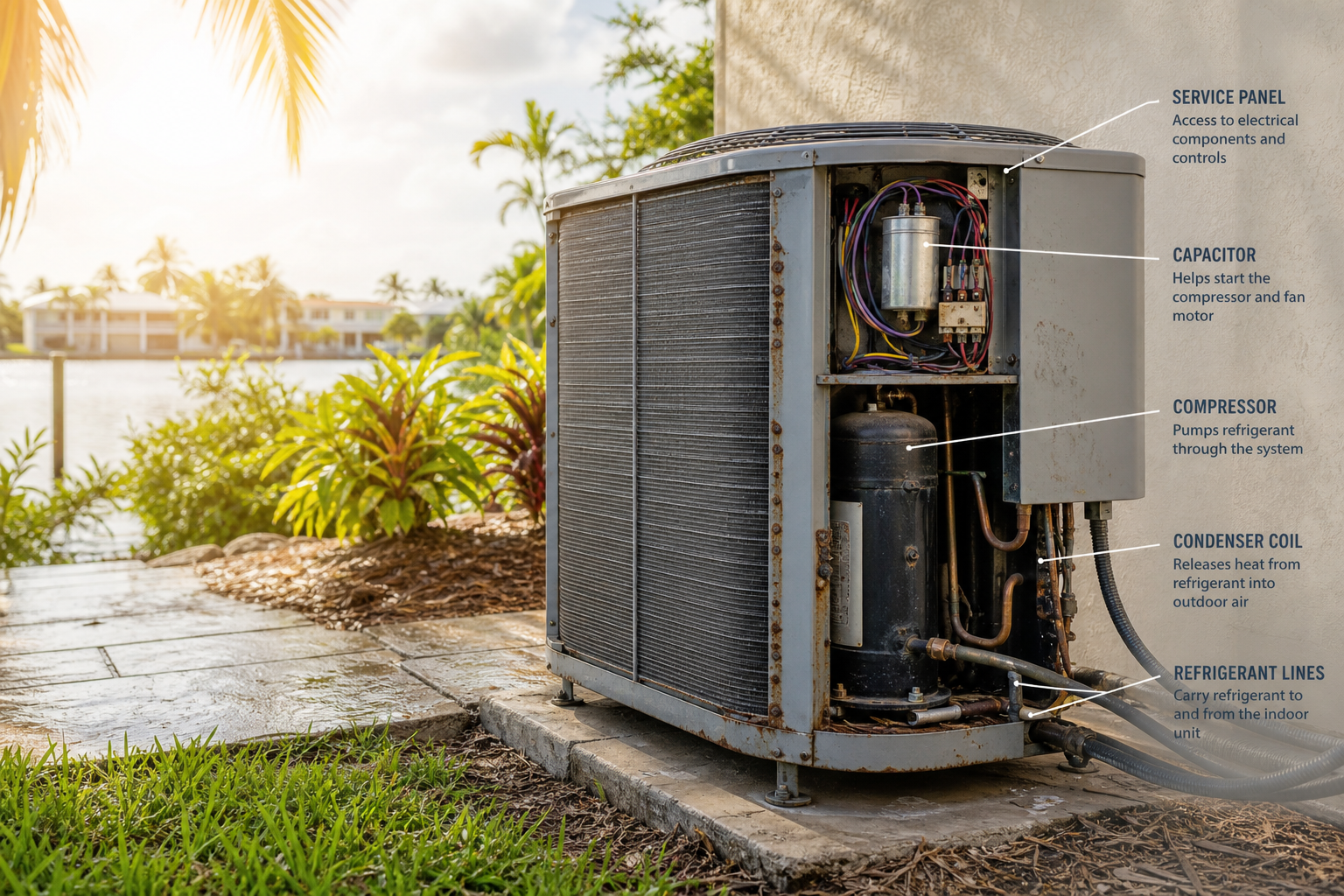
The AC compressor is the major outdoor-unit component that pressurizes refrigerant so heat can move out of the home. AC compressor failure can be electrical, mechanical, or performance-related, and it often develops after another issue forces the compressor to run too hot, too long, or under abnormal pressure.
In simple terms, your air conditioner removes heat from indoor air and releases that heat outdoors. The refrigerant absorbs heat inside, then travels to the outdoor unit. The compressor raises the refrigerant’s pressure and temperature so the outdoor coil can release heat into the outside air.
When the compressor is healthy, this process repeats smoothly. When it is stressed, the system may still run for a while, but cooling performance drops and internal damage can build.
Three Practical Types of Compressor Failure
- Electrical failure: This includes damaged windings, a grounded compressor, open circuits, loose wiring, contactor problems, capacitor failure, or voltage issues. Electrical failure can prevent the compressor from starting or cause repeated breaker trips.
- Mechanical failure: This includes internal wear, broken valves, bearing damage, scroll damage, or damage from liquid refrigerant entering the compressor. Mechanical problems often show up as loud noises, vibration, poor compression, or complete failure.
- Performance failure: This happens when the compressor still runs but cannot maintain proper cooling. Overheating, incorrect refrigerant charge, dirty coils, restricted airflow, and aging internal parts can all reduce performance.
It is also important to separate true compressor failure from related HVAC issues. A bad thermostat setting, clogged air filter, failed blower motor, weak capacitor, bad contactor, refrigerant leak, or failed condenser fan can mimic signs of a bad compressor. That is why professional HVAC compressor troubleshooting usually checks the full system before condemning the compressor.
The Most Common Causes of Compressor Failure
Low Refrigerant or Refrigerant Leaks
Low refrigerant usually means there is a leak, not that the system “used up” refrigerant during normal operation. When refrigerant is low, the AC may run longer, cool less effectively, and operate at temperatures and pressures that can overheat the compressor.
Homeowners may notice warm air, longer cooling cycles, ice on refrigerant lines, hissing sounds, or rising energy bills. Adding refrigerant without finding and repairing the leak is not a real fix. It can temporarily improve cooling while the underlying condition continues to damage the system.
Low refrigerant can also affect oil movement through the system. The compressor depends on proper lubrication, and refrigerant flow helps return oil where it belongs. If that flow is disrupted, internal wear can accelerate.
Dirty Condenser Coils and Overheating
Dirty outdoor coils make it harder for the AC to release heat. When the condenser coil is coated with dirt, grass clippings, leaves, lint, or salt-air residue, heat rejection drops and the compressor has to work harder against higher pressure.
This is especially important in hot, humid climates such as South Florida and West Palm Beach, where air conditioners often run for long seasons with heavy daily demand. A compressor that is already operating in high outdoor temperatures has less room for additional stress from a clogged or neglected coil.
Warning signs can include reduced cooling, hot air blowing from the top of the outdoor unit, frequent cycling, high energy bills, or the system shutting down during the hottest part of the day. Keeping the area around the outdoor unit clear is helpful, but deep coil cleaning should be handled carefully to avoid bending fins or damaging components.
Electrical Problems, Capacitors, and Contactors
Electrical problems are a major cause of compressor failure because the compressor needs a strong, stable electrical supply to start and run. Weak capacitors, pitted contactors, loose connections, voltage drops, and surge damage can all cause hard starts, overheating, or winding damage.
A capacitor helps provide the electrical boost needed for startup and operation. When it weakens, the compressor may hum, struggle to start, or shut off on thermal protection. A contactor acts like a controlled switch; if its contacts are burned or stuck, the compressor may not receive power correctly.
Homeowners should not test capacitors or open electrical compartments. These parts can hold dangerous voltage even when the system is off. If the outdoor unit hums, clicks repeatedly, or trips the breaker, it is time to stop guessing and schedule service.
More Compressor-Damaging Conditions Homeowners Should Know
Some causes of compressor failure are less visible from the outside but can be severe. These conditions usually require professional HVAC compressor troubleshooting because they involve refrigerant pressures, electrical readings, internal system cleanliness, and manufacturer specifications.
Incorrect Refrigerant Charge
Incorrect refrigerant charge can damage the compressor whether the system is undercharged or overcharged. Too little refrigerant can reduce cooling capacity, increase run time, and contribute to overheating. Too much refrigerant can raise pressure and strain the compressor.
A proper charge is not based on guesswork. Technicians evaluate temperatures, pressures, airflow, equipment type, and manufacturer charging procedures. This is why simply “topping off” a system without measurements can create new air conditioner compressor problems instead of solving the original one.
Liquid Slugging or Floodback
Compressors are designed to compress vapor, not liquid. If liquid refrigerant returns to the compressor, it can cause severe internal damage. This may happen because of improper charge, metering device problems, airflow problems, or operating conditions that prevent refrigerant from boiling off correctly in the indoor coil.
Slugging is a sudden liquid return event that can break internal components. Floodback is a more continuous return of liquid refrigerant that can wash oil away from internal parts and cause wear. Either condition can shorten compressor life quickly.
Contaminants, Moisture, or Acid in the Refrigerant System
Moisture, acid, debris, and non-condensable gases can all harm the sealed refrigerant system. Contamination may come from poor installation practices, a previous burnout, improper evacuation, failed components, or service errors.
Moisture can form acids and restrict refrigerant flow. Acid can attack motor windings and oil. Debris can block metering devices or damage moving parts. Once contamination is inside the system, compressor replacement alone may not be enough unless the system is properly cleaned, filtered, evacuated, and verified.
Signs of a Bad Compressor vs Other AC Problems
Signs of a bad compressor can overlap with many other HVAC issues. Use the guide below to understand what a symptom may mean, but treat it as a starting point, not a final diagnosis.
- Warm air: May point to poor compression or a compressor that is not running. It could also be caused by a thermostat issue, refrigerant leak, dirty filter, blower problem, or dirty coil. Urgency: schedule service soon, especially if airflow is normal but the air is not cooling.
- Outdoor unit humming: May mean the compressor is trying to start but cannot. It could also be a weak capacitor, stuck contactor, or fan motor issue. Urgency: stop running the system if humming repeats.
- Hard starting: May indicate compressor strain or internal wear. It could also be a bad capacitor, voltage issue, or failing start component. Urgency: urgent if it happens repeatedly.
- Breaker trips: May point to compressor electrical failure, grounding, locked rotor, or overheating. It could also be a shorted wire or failed fan motor. Urgency: stop use and call for service. Do not repeatedly reset the breaker.
- Loud grinding or screeching: May indicate internal mechanical damage. It could also be a failing fan motor or loose component. Urgency: shut the system off.
- Vibration: May point to hard starts, internal imbalance, or mounting issues. It could also be loose panels, refrigerant line vibration, or fan problems. Urgency: schedule service before damage spreads.
- Reduced cooling: May mean the compressor is losing capacity. It could also be low refrigerant, poor airflow, dirty coils, duct leakage, or thermostat problems. Urgency: service soon.
- High energy bills: May come from a struggling compressor running longer than normal. It could also be dirty filters, leaky ducts, poor insulation, or extreme weather. Urgency: investigate if the increase is sudden or unusual.
- Short cycling: May overheat and damage the compressor over time. It could also be an oversized system, low refrigerant, dirty coils, thermostat placement, or control board issue. Urgency: service soon.
- Burning smell: May indicate electrical overheating at or near the compressor circuit. It could also be wiring, motor, or control failure. Urgency: shut the system off and call for service.
- Outdoor fan runs but compressor does not: May indicate a failed compressor, open winding, thermal overload, or locked rotor. It could also be a capacitor, contactor, wiring, or control issue. Urgency: service needed.
Safe Homeowner Checks Before Calling for Service
Homeowners can safely check thermostat settings, airflow, breaker status, outdoor clearance, and visible symptoms before calling for service. Do not open electrical panels, test capacitors, add refrigerant, bypass safety controls, or keep running an AC that trips breakers, smells hot, or makes loud metal-on-metal noises.
Start with these safe checks:
- Confirm thermostat settings. Make sure the system is set to cool, the temperature is set below the indoor temperature, and the fan setting is appropriate.
- Check the air filter. A clogged filter can reduce airflow, freeze the coil, increase run time, and contribute to compressor stress.
- Look at supply and return vents. Make sure furniture, rugs, curtains, or closed vents are not restricting airflow.
- Inspect the outdoor unit from the outside only. Clear leaves, grass, branches, and debris around the cabinet. Leave enough open space for airflow.
- Observe the breaker. If the AC breaker has tripped, you may note it, but do not repeatedly reset it. If it trips again, stop using the system and call for service.
- Listen and look without touching internal parts. Note humming, clicking, buzzing, vibration, ice on refrigerant lines, or whether the outdoor fan runs.
Before the technician arrives, write down useful details:
- When the problem started
- Whether cooling stopped suddenly or gradually declined
- Whether the outdoor fan runs
- Whether the compressor hums, clicks, or tries to start
- Whether the breaker tripped
- Whether you see ice on refrigerant lines or the indoor coil area
- Any burning smells, grinding noises, or screeching sounds
- Recent power outages, storms, or electrical surges
- Recent maintenance, repairs, or refrigerant additions
Refrigerant work is not a homeowner task. Regulated refrigerants must be handled by properly certified technicians under federal requirements. If low refrigerant, contamination, incorrect charge, or internal compressor damage is suspected, the safest next step is a professional diagnosis.
HVAC Compressor Troubleshooting: What a Technician Will Check
Professional hvac compressor troubleshooting is more than confirming that the outdoor unit will not run. A compressor can fail because of an electrical problem, a refrigerant problem, an airflow problem, or a combination of all three. That is why a good diagnosis looks for the failed part and the reason it failed.
A technician will usually start with safe electrical testing. This may include checking incoming voltage, measuring amperage, testing capacitor values, inspecting the contactor, and looking for loose, burnt, or corroded wiring. If the compressor is trying to start but cannot, the technician may also check for a locked-rotor condition, hard-start symptoms, or a weak start component.
Compressor winding tests are another important step. The technician can measure winding resistance and check whether the compressor is grounded. If the windings are open, shorted, or grounded, the compressor itself may be electrically damaged. If the windings test normally, the issue may be elsewhere, such as a failed capacitor, control problem, contactor issue, or power supply concern.
Next comes refrigerant and sealed-system testing. The compressor depends on the right refrigerant charge and proper refrigerant flow to stay cool and lubricated. A technician may measure suction and liquid pressures, superheat, subcooling, temperature split, and line temperatures. These readings help show whether the system is undercharged, overcharged, restricted, contaminated, or struggling to move heat properly.
For example, low suction pressure with other supporting symptoms may point toward a refrigerant leak, airflow restriction, or metering device issue. High head pressure may point toward a dirty condenser coil, poor outdoor airflow, overcharge, or restriction. These details matter because replacing a compressor without correcting the original cause can lead to another ac compressor failure.
Technicians may also look for leak indicators, oil stains, moisture, acid, or contamination in the refrigerant circuit. If a compressor has burned out internally, the system may need cleanup steps before a new compressor is installed. Skipping that step can expose the replacement compressor to acids, debris, or moisture left behind in the sealed system.
Airflow and heat transfer are just as important. The technician may check the air filter, blower motor operation, indoor evaporator coil condition, duct restrictions, return airflow, outdoor condenser coil condition, condenser fan motor, and outdoor clearance. In warm, humid climates like South Florida, the system may run long hours under heavy load, so weak airflow or a dirty coil can create serious compressor stress.
A practical diagnostic visit often includes checks such as:
- Verifying thermostat call for cooling and control voltage.
- Testing the capacitor, contactor, wiring, and disconnect.
- Measuring compressor amperage and comparing it to rated values.
- Checking compressor windings for resistance and grounding.
- Measuring refrigerant pressures, superheat, and subcooling.
- Inspecting for leaks, restrictions, moisture, acid, or contamination.
- Confirming indoor airflow and outdoor heat rejection.
- Identifying the root cause before recommending repair or replacement.
This is why compressor diagnosis is not usually a quick visual inspection. The same symptom, such as warm air from the vents, can be caused by a bad capacitor, a refrigerant leak, a dirty coil, poor airflow, a failed fan motor, or an actual bad compressor.
What Is the 3 Minute Rule for AC?
The 3 minute rule for AC means you should wait several minutes before restarting your air conditioner after it shuts off, loses power, or is turned off at the thermostat. Many systems and thermostats include a built-in compressor time delay, often around three to five minutes, to protect the compressor from short-cycle stress.
In simple terms, your AC system operates with a high-pressure side and a low-pressure side. When the system shuts off, those pressures need time to equalize. If the compressor is forced to restart immediately, it may have to start against higher pressure than normal. That can create a hard start, a humming sound, a breaker trip, or unnecessary strain on the motor.
This is especially important after a power blink, thermostat adjustment, or accidental rapid on-off switching. If your thermostat screen is back on but the outdoor unit does not start immediately, that delay may be normal. The system may simply be protecting the compressor.
Homeowners can use this rule in a few practical ways:
- If you turn the AC off, wait at least three to five minutes before turning it back on.
- Do not rapidly switch between cooling modes or temperature settings.
- After a brief outage, give the system several minutes before assuming it has failed.
- If the compressor repeatedly hums, clicks, or trips a breaker after the delay, stop trying to restart it and call for service.
One accidental quick restart may not ruin a compressor, but repeated immediate restarts can contribute to hard starts, nuisance trips, overheating, and avoidable wear. If your AC is short cycling on its own, meaning it starts and stops frequently without you touching the thermostat, that is a separate problem that should be diagnosed.
Can Compressor Failure Be Prevented?
Not every compressor failure can be prevented. Age, manufacturing defects, storm damage, and long-term wear can still catch up with an air conditioner. However, many causes of compressor failure are related to airflow, heat transfer, refrigerant charge, and electrical stress. Those risks can often be reduced with timely maintenance and early repairs.
The first prevention step is healthy airflow. Replace filters on a regular schedule, and check them more often during heavy cooling months. Keep return and supply vents open, avoid blocking grilles with furniture, and pay attention to rooms that suddenly feel weak or stuffy. Poor airflow can cause frozen coils, low refrigerant pressure symptoms, overheating, and liquid refrigerant return problems.
Use this airflow checklist:
- Replace a dirty filter instead of waiting for the system to struggle.
- Keep interior doors and return paths from being blocked.
- Do not close large numbers of supply vents to “save energy.”
- Call for service if you see ice on refrigerant lines or the indoor coil area.
- Address weak airflow before the compressor is forced to run under bad conditions.
The second prevention step is protecting heat rejection at the outdoor unit. Your condenser has to release heat outside. If the coil is packed with dirt, grass clippings, leaves, lint, or salt-air residue, the system can run hotter and at higher pressure. That extra load can shorten compressor life.
Keep the outdoor unit clear on all sides, and do not let shrubs grow into the cabinet. In humid and coastal environments, outdoor coils may need more attention because debris, corrosion, and salt exposure can build up faster. Professional maintenance can include coil cleaning, fan inspection, electrical tightening, refrigerant performance checks, and temperature measurements.
The third prevention step is responding early to refrigerant and electrical warning signs. Do not ignore declining cooling, longer run times, hissing sounds, oily residue near refrigerant lines, hard starts, buzzing, flickering lights when the AC starts, or repeated breaker trips. These are not just comfort issues. They may be early warnings that the compressor is operating under stress.
Call for diagnosis if you notice:
- The AC runs constantly but does not cool well.
- The outdoor unit starts loudly or struggles to start.
- The breaker trips when cooling begins.
- The system needs refrigerant added repeatedly.
- The outdoor fan runs but the compressor does not appear to start.
- You hear hissing, buzzing, grinding, or loud humming from the outdoor unit.
Prevention is about reducing risk, not guaranteeing the compressor will last forever. The best results come from routine maintenance, clean airflow, clean coils, correct refrigerant charge, and quick attention when the system starts behaving differently.
Repair or Replace: What Happens After a Compressor Fails?
If a compressor has failed, the next step depends on warranty status, system age, refrigerant type, failure cause, contamination, and the overall condition of the equipment. The question is not only whether the compressor can be replaced. The bigger question is whether replacing it is the most reliable and cost-effective choice.
Compressor replacement is often one of the most expensive AC repairs. The actual cost can vary widely based on system size, labor, accessibility, refrigerant type, warranty coverage, compressor availability, and whether additional cleanup or parts are needed. A compressor may be covered under a parts warranty, but labor, refrigerant, filter driers, cleanup materials, and related components may not be fully covered.
Important decision factors include:
- Warranty status: Is the compressor still covered by the manufacturer’s parts warranty?
- System age: Is the AC near the end of its expected service life?
- Refrigerant type: Is the system using an older refrigerant that may be costly or harder to source?
- Failure cause: Was the compressor killed by low refrigerant, poor airflow, electrical problems, or contamination?
- System condition: Are the coils, fan motors, controls, and ductwork in good condition?
- Repair history: Has the system needed frequent service recently?
- Efficiency: Would a newer system reduce energy use and improve comfort?
Contamination is a major concern. If the compressor experienced an electrical burnout, acids and debris may be present inside the refrigerant circuit. If moisture entered the sealed system, it can create damaging conditions. If the original issue was low refrigerant, a restriction, poor airflow, or high head pressure, a new compressor can be put at risk unless that issue is corrected first.
For a newer system under warranty, compressor replacement may make sense if the rest of the equipment is in good shape and the root cause can be corrected. For an older system with a major compressor failure, refrigerant concerns, coil corrosion, or a history of expensive repairs, full system replacement may be the more practical option.
Before approving a compressor replacement, ask the technician:
- What test confirms the compressor has failed?
- What likely caused the failure?
- Is the compressor covered by parts warranty?
- What labor, refrigerant, and materials are not covered?
- Was acid, moisture, or contamination found?
- Will the system need a filter drier, flush, evacuation, or other cleanup?
- What is the risk of another failure if we repair instead of replace?
- How does the repair cost compare with replacement options?
A trustworthy recommendation should explain both the failed component and the conditions around it. If the estimate only says “bad compressor” without discussing refrigerant readings, electrical findings, airflow, system age, and warranty, ask for more detail before deciding.
FAQ
How do you know if an AC compressor is damaged?
Common signs of a bad compressor include warm air from the vents, a humming outdoor unit, hard starting, tripped breakers, loud noises, or an outdoor fan running while the compressor does not start. However, these symptoms can also come from a bad capacitor, contactor, fan motor, low refrigerant, or airflow problem, so testing is needed.
What is the most common cause of AC compressor failure?
There is not one cause in every system, but common causes include poor airflow, dirty coils, low refrigerant from leaks, electrical problems, overheating, and lack of maintenance. Many failures happen after the compressor has been forced to run under stressful conditions for too long.
Can low refrigerant ruin an AC compressor?
Yes. Low refrigerant can reduce compressor cooling and lubrication, cause long run times, and create conditions that overheat or damage the compressor. If your system is low on refrigerant, the leak should be found and repaired rather than repeatedly topping off the system.
Can a bad capacitor look like compressor failure?
Yes. A weak or failed capacitor can prevent the compressor from starting, causing humming, clicking, or shutdowns that may look like compressor failure. This is one reason electrical testing is an important part of diagnosing air conditioner compressor problems.
Should I keep resetting the breaker if my AC compressor trips it?
No. Repeatedly resetting a breaker can be unsafe and may worsen equipment damage. If the AC trips the breaker more than once, turn the system off and schedule service. The cause could be a short, grounded compressor, locked rotor, failing motor, wiring issue, or overloaded circuit.
Is it worth replacing an AC compressor or the whole AC system?
It depends on the system’s age, warranty, refrigerant type, repair cost, contamination risk, and overall condition. Compressor replacement may make sense on a newer system under warranty. Full replacement may be smarter for an older system with expensive repairs, poor efficiency, corrosion, or unresolved root-cause problems.


Leave a reply