AC Fan Running but Not Cooling? A Fan Running Without Cooling Guide for Homeowners
What to Do First When the AC Fan Runs but There’s No Cold Air
If your AC fan is running with no cold air, the blower may be moving air without an active cooling cycle. Start by setting the thermostat to Cool, lowering the temperature 3–5 degrees below the room temperature, and switching the fan from On to Auto for a clear cooling test.
Before assuming you need AC repair, check the simple things that commonly make an air conditioner not cooling problem feel worse:
- Thermostat mode: Make sure it is not set to Fan Only, Heat, or Off.
- Temperature setting: Set it low enough that the system should call for cooling.
- Fan setting: Use Auto so the blower runs only when heating or cooling is requested.
- Air filter: Replace a dirty or clogged filter if it is accessible.
- Returns and vents: Make sure return grilles are not blocked by furniture and supply vents are open.
Why “Fan Running” Does Not Always Mean “AC Cooling”
A running fan does not always mean your AC is cooling. The indoor blower can move air through the filter, ducts, and vents even when the outdoor condenser and cooling components are not removing heat. That distinction is central to any practical fan running without cooling guide.
Think of the indoor blower as the air mover. It pulls indoor air through the return, pushes it through the system, and sends it back through the supply vents. By itself, the blower does not make cold air.
Active cooling requires more than airflow. The thermostat must call for cooling, the outdoor unit must run, and the cooling system must be able to absorb heat from inside and release it outside. If one part of that process is not happening, you may feel room-temperature air even though air is coming from the vents.
This is why homeowners often say the hvac fan runs but no cooling happens. In many cases, the fan is doing exactly what it was told to do, while the cooling side is off, delayed, locked out, or not working properly.
Thermostat Fan Modes Explained: Auto, On, Fan Only, and Circulate
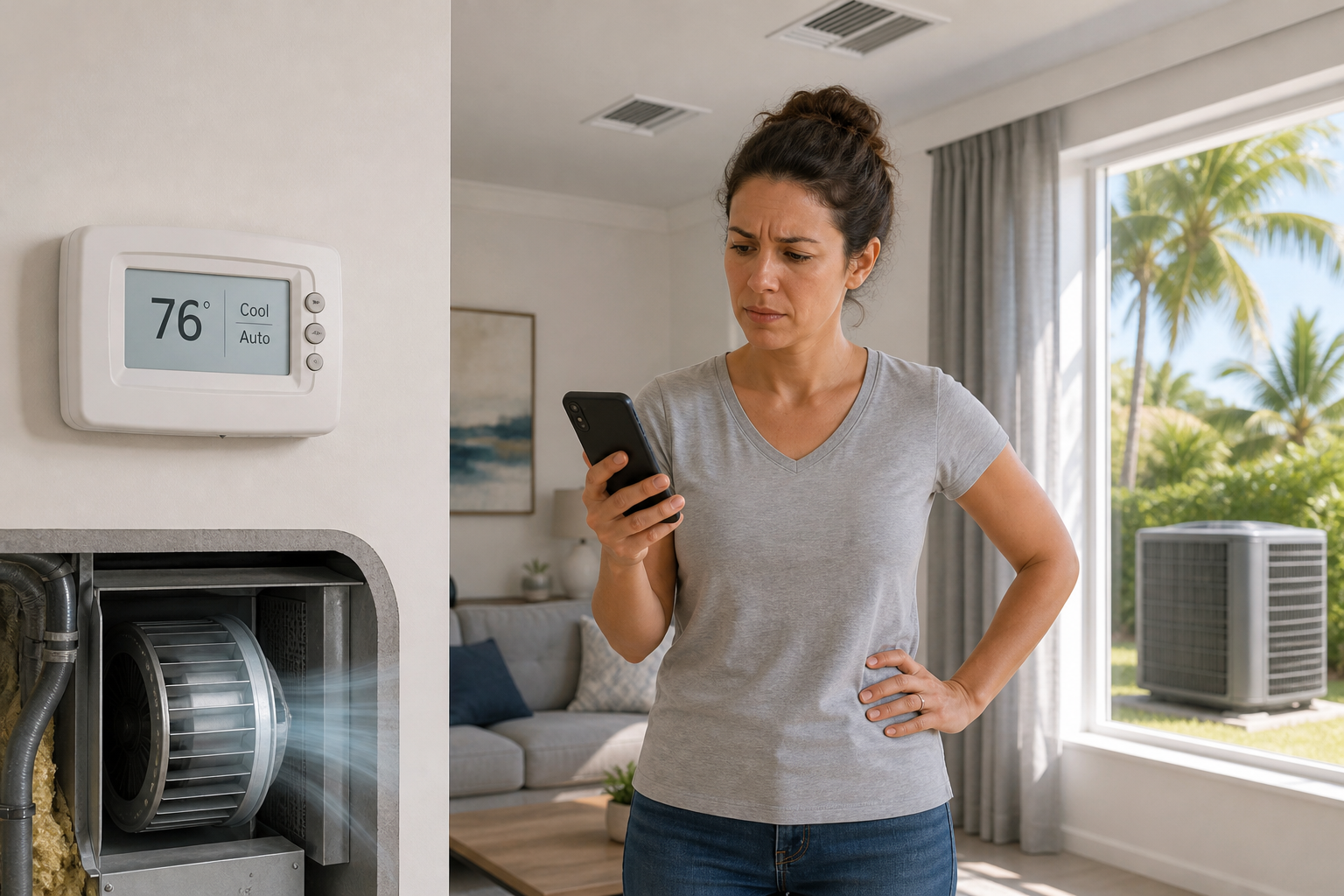
Thermostat fan settings can make it seem like your central air is not blowing cold when the fan is simply operating separately from cooling. The fastest test is to choose Cool mode, set the temperature below the room temperature, and place the fan on Auto.
- Auto: The fan runs during a heating or cooling call. This is usually the best setting when you want to know whether the system is actually cooling.
- On: The fan runs continuously, even after a cooling cycle ends. You may feel air from the vents that is not cold.
- Fan Only: The system circulates indoor air without active cooling. This can help with air movement, but it will not lower the indoor temperature like AC cooling.
- Circulate: The fan runs intermittently to mix air and support filtration. It may improve comfort in some rooms, but it does not guarantee cooling unless the system is also in an active cooling cycle.
What does just running the fan on AC do? It moves air through the home and may help filtration if the filter is clean, but it does not remove heat or humidity the way a cooling cycle does.
What does circulation mode on a thermostat do? It runs the blower at intervals to mix air between rooms. It can reduce stuffiness, but it is not a substitute for cooling in hot, humid weather.
Common Reasons Your AC Fan Is Running With No Cold Air
Use this quick ac troubleshooting guide to separate simple setting issues from likely repair situations when the ac fan running no cold air symptom continues.
- Thermostat setting issue: The fan may be set to On or Fan Only while Cool mode is not active. The setpoint may also be too close to the room temperature, so the system is not calling for cooling.
- Airflow issue: A dirty filter, blocked return, closed supply vents, or weak airflow can reduce comfort and make the home feel like the AC is not cooling properly.
- Outdoor unit issue: If the outdoor unit does not start during a cooling call, the indoor blower may still run while no cold air is produced.
- Electrical or control issue: A tripped breaker, failed capacitor, control board issue, or safety switch can prevent part of the system from operating.
- Cooling system issue: Refrigerant problems, frozen coils, or compressor trouble require professional diagnosis.
Safe Homeowner Checks Before Calling for AC Repair
You can safely check thermostat mode, setpoint, fan setting, filter, vents, outdoor-unit operation, and one breaker reset. If the central air not blowing cold problem continues after these steps, stop troubleshooting and call a qualified AC professional.
- Confirm Cool mode. Do not test in Heat, Off, or Fan Only.
- Lower the setpoint. Set the thermostat 3–5 degrees below the current indoor temperature.
- Switch Fan to Auto. This helps confirm whether the blower runs with a real cooling call.
- Wait 5–10 minutes. Some systems have built-in delays to protect equipment.
- Inspect the air filter. Replace it if it is dirty, clogged, or overdue.
- Check vents and returns. Open supply vents and clear blocked return grilles.
- Look and listen outside. From a safe distance, see whether the outdoor unit starts. Do not remove panels or touch wiring.
- Check the breaker once. If a breaker is tripped, reset it one time. If it trips again, do not keep resetting it.
Repeated breaker trips can indicate an electrical or equipment fault. Continuing to reset the breaker can create a safety risk and may damage the system further.
Should You Run the Fan Without Cooling in Hot, Humid Weather?
Running the fan without cooling is not automatically bad, but it has limits. It can improve air movement for a short time, yet it will not remove heat or dehumidify the home. In South Florida-style humidity, fan-only operation may even make the home feel clammy.
Should you turn off the AC if it’s not blowing cold air? Yes. If the thermostat is set to Cool and the system keeps blowing warm or room-temperature air, turn cooling off and use Fan Only temporarily if you need air movement while arranging service.
Fan-only operation can be useful for mild evenings, short-term air mixing, filtration, or testing thermostat settings. It is not a cooling strategy during hot, humid afternoons.
For most humid climates, Auto is usually better than On for comfort. In Auto, the blower stops when the cooling cycle stops. In On, the blower can continue moving air across the indoor coil after cooling ends, which may redistribute moisture and make the air feel less comfortable.
If your BlueNest comfort goal is a cooler, drier home, use fan settings intentionally: Auto for normal cooling, Fan Only for short-term circulation, and professional service when airflow continues but cooling does not return.
When to Stop Troubleshooting and Call an HVAC Professional
A homeowner-friendly ac troubleshooting guide can help you rule out simple issues, but there is a clear point where it is safer and smarter to stop. If the thermostat is set to cooling, the temperature setting is below the room temperature, the air filter is clean, the vents are open, and your AC fan is running with no cold air, the problem is likely beyond a basic setting or airflow fix.
At that point, the system may need a professional diagnosis. The issue could involve the outdoor unit, capacitor, compressor, refrigerant circuit, control board, blower motor, electrical components, or a safety switch. These are not areas to test by trial and error, especially in hot, humid South Florida conditions where indoor temperatures can rise quickly.
Call for AC service if the outdoor unit is not running
When your thermostat is calling for cooling, the indoor fan may run while the outdoor condenser stays silent. If the outdoor unit does not start, you may feel air from the vents, but it will not be cold. This is a common reason homeowners describe the problem as hvac fan runs but no cooling.
Step outside and listen carefully from a safe distance. If the outdoor unit is completely off during a cooling call, do not remove panels or reach inside the equipment. The cause may be electrical, mechanical, or related to a failed start component. A technician can test the system safely and confirm what is preventing the cooling cycle from starting.
Call if the breaker trips again after one reset
If your AC breaker has tripped, you may reset it one time. If it trips again, stop. A repeated trip is a warning sign, not an inconvenience to keep resetting. The system may be drawing too much current or experiencing an electrical fault.
Repeated breaker trips can point to a failing motor, shorted component, compressor issue, wiring problem, or overloaded circuit. Continuing to reset the breaker can create a safety risk and may cause additional damage. If your central air is not blowing cold and the breaker will not stay on, turn the system off and schedule service.
Call if weak airflow continues after basic checks
Weak airflow can make an air conditioner not cooling problem worse. If you replaced or checked the filter, confirmed supply vents are open, and made sure return grilles are not blocked, but airflow is still weak, there may be a deeper issue.
Persistent weak airflow can be caused by a dirty evaporator coil, blower motor problem, duct leakage, collapsed ductwork, zone control issue, or heavy moisture and debris buildup inside the system. These problems can reduce comfort, increase energy use, and contribute to coil freezing.
Stop immediately for ice, burning smells, buzzing, or electrical symptoms
Some warning signs mean you should stop running the system and call for help right away. Do not keep testing the AC if you notice any of the following:
- Ice on refrigerant lines or the indoor coil area: Ice can point to airflow trouble, low refrigerant, or coil problems. Running the system while frozen can make the issue worse.
- Burning odors: A burning smell may indicate overheating electrical parts, motor trouble, or wiring concerns.
- Loud buzzing or humming: This can happen when a component is trying and failing to start, especially near the outdoor unit.
- Repeated clicking with no cooling: Controls may be calling for cooling, but equipment is not starting properly.
- Warm air and rising indoor temperature: In hot weather, this can become urgent, especially for children, older adults, pets, or anyone with health concerns.
- Water around the indoor unit: A clogged drain, frozen coil thawing, or condensate problem may be present.
If any of these symptoms appear, turn the thermostat to Off. You can leave the fan off as well unless a technician instructs otherwise. This helps prevent further strain while you wait for diagnosis.
A simple decision checklist
Use this quick checklist to decide whether you are still in safe homeowner-check territory or ready for a professional visit:
- Thermostat is set to Cool, not Heat or Fan Only.
- Set temperature is at least a few degrees below the current room temperature.
- Fan is set to Auto for normal cooling operation.
- Air filter is clean and properly installed.
- Supply and return vents are open and not blocked.
- Outdoor unit is clear of obvious debris and has space for airflow.
- Breaker has not tripped again after one reset.
- No ice, burning smell, buzzing, or electrical symptoms are present.
If you completed these steps and still have no cold air, it is time to call BlueNest. A trained technician can determine whether the problem is electrical, refrigerant-related, airflow-related, or caused by a failed component, then explain the repair options clearly.
Running the fan may make the home feel less stagnant, but it will not solve a cooling failure. In humid Florida weather, it may also move damp air around without removing moisture. When the indoor temperature keeps climbing, the best next step is a proper AC diagnosis.
FAQ
Why is my HVAC fan running but there is no cold air?
Your indoor fan can run even when the cooling side of the system is not working. The thermostat may be set to Fan Only or On, the outdoor unit may not be running, the air filter may be restricting airflow, or the system may have an electrical, refrigerant, compressor, or coil issue.
Should I turn off my AC if it’s not blowing cold air?
Yes, in many cases. If the system is running but not cooling after basic checks, turn it off and call for service. Turn it off immediately if you see ice, smell burning, hear buzzing, or notice the breaker tripping.
What does just running the fan on AC do?
Running just the fan moves indoor air through the ductwork and vents. It can help with circulation, but it does not cool the air or remove humidity unless the cooling cycle is also operating.
What does circulation mode on a thermostat do?
Circulation mode runs the fan periodically instead of constantly. It helps mix air throughout the home without keeping the fan on all the time. It is different from active cooling and will not lower temperature by itself.
Does running the fan on my air conditioner use a lot of electricity?
The fan uses less electricity than full cooling, but it still uses power. If it runs constantly, that usage can add up. In humid weather, constant fan operation may also affect comfort by moving moisture through the home.
Should my thermostat fan be set to Auto or On in humid weather?
For most humid climates, Auto is usually the better setting. It lets the fan run during cooling cycles and shut off between cycles, which helps the system remove moisture more effectively. Constant On mode can make the home feel clammy if the AC is not actively cooling.


Leave a reply