Why Is My AC Dripping? A Common Drip Causes Guide for Homeowners
Common Drip Causes Guide: Quick Answer and Symptom Table
Most AC drips come from a clogged condensate drain, frozen evaporator coil, drain pan or pump problem, disconnected drain line, high humidity, or duct condensation. If water is indoors, near electrical components, dripping from a ceiling, or actively pooling, turn the system off and call an HVAC professional.
Your air conditioner does more than cool the air. Warm, humid indoor air moves across a cold evaporator coil. Moisture in that air condenses into water, much like droplets forming on a cold glass. That water should fall into a drain pan, then flow safely through a condensate drain line or condensate pump.
When that drainage path is blocked, damaged, misaligned, or overwhelmed, you may notice your AC leaking water in places it should not. Use this common drip causes guide to match what you see with the most likely issue.
| Where You See Water | Likely Cause | What to Check | When to Call |
|---|---|---|---|
| Water under the indoor air handler | Clogged condensate drain, overflowing drain pan, cracked pan, or frozen coil meltwater | Look for standing water, a wet cabinet base, or a full secondary pan if visible | Call if water is pooling indoors, the pan is full, or the leak returns |
| Water near the outdoor drain outlet | Normal condensate drainage or a partial clog if flow is weak or inconsistent | Check whether water is dripping steadily during cooling | Call if the system shuts off, indoor water appears, or flow stops completely |
| Ceiling or vent dripping | Duct condensation, leaking attic air handler, clogged drain, wet insulation, or overflow | Look for ceiling stains, wet vent grilles, or moisture around ducts | Call quickly because ceiling leaks can become property damage |
| Wet float switch area | Backed-up condensate, full pan, or tripped safety switch | See whether the thermostat is on but the system will not run | Call if the float switch trips repeatedly or the unit will not restart |
| Water around the drain line exit | Normal discharge, algae buildup, poor drain slope, or partial blockage | Check for slow dripping, gurgling, or no flow while the AC is running | Call if the line clogs again after basic observation |
| Ice on the refrigerant line or coil | Restricted airflow, dirty filter, low refrigerant, blower issue, or coil problem | Turn the system off and let ice thaw before further operation | Call if ice is visible or returns after replacing a dirty filter |
| Dripping from ducts, vents, or around registers | Duct sweating from humid air, poor insulation, air leaks, or oversized moisture load | Look for condensation on metal vents, wet drywall, or musty odors | Call if dripping continues, stains form, or rooms feel damp |
Is AC Dripping Ever Normal?
A small amount of water dripping from the outdoor condensate drain while your AC is cooling can be normal. Indoor pooling, stained ceilings, wet drywall, overflowing pans, wet vents, or repeated system shutoffs are not normal. Those symptoms usually mean the condensate system or airflow needs attention.
Normal condensate drainage should be controlled. The water forms inside the air handler, collects in the drain pan, and exits through the drain line. You may see water dripping outside from a small pipe when the AC has been running, especially on humid days.
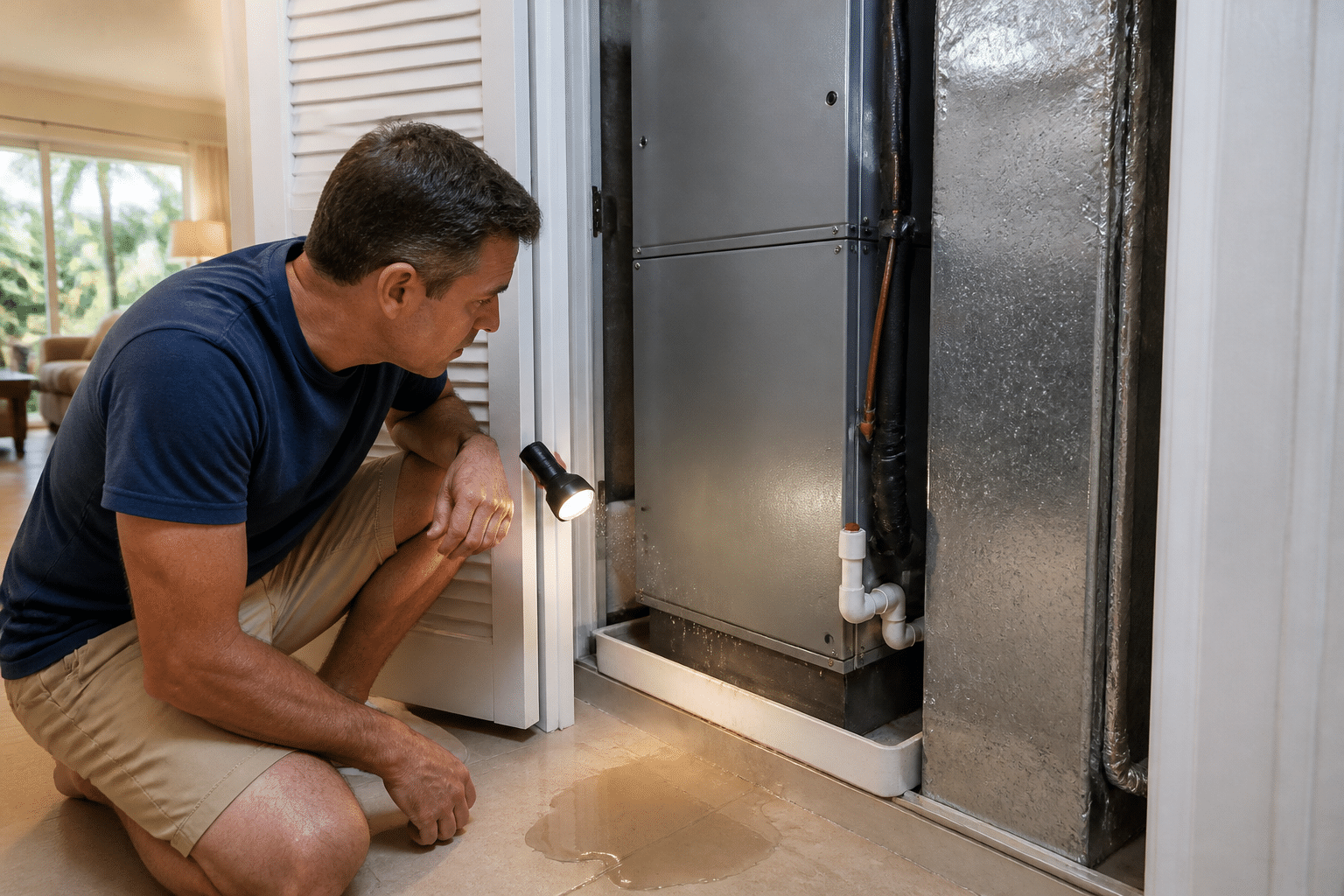
That outdoor drip should not be confused with an AC leaking water inside the house. Indoor water usually points to one of three problems: the condensate path is blocked, frozen-coil meltwater is overwhelming the pan, or a pan, pump, drain line, or safety switch has failed.
Water near the outdoor unit can also be harmless if it is simply coming from the condensate drain outlet. However, unusual pooling around equipment, oil-like residue, recurring shutdowns, or water appearing in multiple places should be checked. A new leak is always worth taking seriously, even if the system seems to be cooling.
In South Florida homes, “a little drip” can escalate quickly. High humidity means your AC may remove more moisture from the air than systems in drier climates. If drainage is even partly restricted, water can back up faster and show up as stains, odors, or wet flooring.
The 8 Most Common AC Drip Causes
When homeowners ask, “Why is my AC dripping?” the answer usually starts with condensate. The system is making water as part of normal cooling, but that water is not leaving the unit the way it should. These are the most common AC drip causes to consider.
1. Air Conditioner Condensate Drain Clogged
An air conditioner condensate drain clogged with algae, sludge, dirt, or debris is one of the most common reasons for indoor leaking. When the drain line cannot move water outside, the drain pan fills up. Water may then spill near the indoor air handler or trigger a float switch that shuts the system down.
Common signs include water under the unit, a full or wet secondary pan, slow or absent drainage from the outdoor drain outlet, gurgling sounds, or repeated thermostat calls with no cooling. In humid weather, a partial clog may act like a full clog because the system is producing condensate faster than the restricted line can carry it away.
2. Dirty Air Filter, Restricted Airflow, or Frozen Evaporator Coil
A dirty air filter can reduce airflow across the evaporator coil. When airflow drops too low, the coil can get too cold and freeze. Once the system stops or the ice begins to thaw, the meltwater may exceed what the drain pan can handle, causing dripping or pooling.
Restricted airflow can also come from blocked return grilles, closed vents, blower problems, dirty coils, or duct issues. Low refrigerant can also contribute to coil freezing, but that requires professional diagnosis. If you see ice on the refrigerant line, coil area, or cabinet, turn the cooling off. Do not keep running the AC with visible ice.
3. Drain Pan, Drain Line, or Condensate Pump Failure
The drain pan is supposed to catch condensate before it moves into the drain line. Over time, pans can rust, crack, shift, or become poorly positioned. If the pan is damaged, water may leak even when the drain line is clear.
Some systems use a condensate pump, especially when water must move upward or across a longer distance before draining. A failed pump, stuck pump float, loose tubing, or bad electrical connection can leave water sitting in the reservoir until it overflows. Drain lines can also become disconnected, sag, or lose proper slope, causing water to collect instead of draining away.
4. Disconnected or Poorly Sloped Drain Line
A drain line does not need to be fully clogged to cause trouble. If it is loose, cracked, sagging, or sloped the wrong way, water can leak at fittings or sit in low spots. That standing water encourages more algae growth and can create recurring blockages.
This issue is common after nearby work in an attic, closet, garage, or utility area. A bumped line may look attached at first glance but still leak under load when the AC runs for longer cycles.
5. Float Switch Activation
A float switch is a safety device designed to shut the AC off when water rises too high in the pan or drain system. If your thermostat is calling for cooling but the system will not run, a wet float switch area may be the clue.
The float switch is not the problem by itself. It is usually warning you that water is backing up somewhere. Do not bypass the switch. It may be preventing ceiling damage, electrical hazards, or a larger indoor water leak.
6. Duct Sweating and Vent Condensation
If water appears at ceiling vents, around supply registers, or on ductwork, the issue may be condensation rather than a direct drain leak. Warm, humid air touching a cold duct or metal vent can cause moisture to form on the surface.
Duct sweating can be caused by poor duct insulation, air leaks around vent boots, humid attic air, oversized cooling equipment, long run times, or indoor humidity problems. In South Florida, this is especially common when humid air reaches cold surfaces in attics, ceilings, or poorly sealed spaces.
7. Unlevel Air Handler or Installation Issue
Condensate drainage depends on gravity unless a pump is used. If the air handler or drain pan is not level, water may collect on the wrong side of the pan and spill before it reaches the drain outlet.
This can happen with older equipment, settling platforms, attic installations, or units that were not properly pitched at installation. A technician can check equipment leveling, drain slope, pan position, and whether the system has enough fall for reliable drainage.
8. High Indoor Humidity Overwhelming a Weak Drainage System
High humidity does not automatically mean something is broken, but it can expose weaknesses. A drain line that worked during mild weather may back up during long summer cycles. A slightly dirty filter may freeze a coil faster. A poorly insulated duct may begin sweating when humidity rises.
If your AC drip only appears on very humid days, do not ignore it. The system may need drain cleaning, airflow correction, duct sealing, insulation repairs, or humidity-control improvements before the problem becomes water damage.
HVAC Water Leak Troubleshooting: What Homeowners Can Safely Check
Before calling for service, you can safely gather useful information. The goal of HVAC water leak troubleshooting is not to take the system apart. It is to reduce damage, identify obvious clues, and help your technician diagnose the issue faster.
- Turn off cooling if water is indoors. Use the thermostat to switch the system off. If water is near electrical components, avoid contact and call for help.
- Protect flooring and belongings. Move furniture, boxes, rugs, and stored items away from the leak. Use towels to limit spreading water.
- Remove standing water if safe. A wet/dry vacuum can help remove water from a floor or secondary pan, but do not reach into electrical areas or sealed HVAC compartments.
- Note exactly where the water appears. Is it under the air handler, at a ceiling vent, near the outdoor drain outlet, around the float switch, or near a wall or ceiling stain?
- Check the thermostat setting. Confirm the system is set to cool and note whether it shut off unexpectedly. Repeated shutoffs may point to a float switch or safety control.
- Inspect the air filter. If the filter is dirty, clogged, collapsed, or overdue for replacement, replace it with the correct size and airflow direction.
- Look for ice. Check visible refrigerant lines and the accessible exterior of the indoor unit. If you see ice or frost, keep cooling off and allow it to thaw.
- Inspect the visible pan from outside the cabinet. If a secondary pan is visible, check whether it is dry, damp, full, rusted, or overflowing.
- Look at the outdoor drain outlet. If you know where the condensate line exits, observe whether water is dripping while the AC runs. No flow during heavy cooling may suggest a blockage.
- Take photos. Photograph the water location, ceiling stains, wet vents, thermostat screen, float switch area, drain outlet, and any visible ice. This helps your technician or property manager.
What not to do: Do not open sealed HVAC compartments, pour harsh chemicals into drain lines, run the AC with visible ice, bypass float switches, ignore repeated shutoffs, or touch wet electrical components. Water and electrical equipment can create a serious hazard, and sealed components should be handled by a qualified professional.
If the leak slows after the system is turned off, that does not mean the problem is solved. Frozen coils can continue dripping as they thaw, and clogged drains can overflow again during the next cooling cycle.
When to Turn Off the AC and Call an HVAC Professional
Turn off the AC immediately if water is near electrical components, the indoor unit is actively pooling water, ice is visible, a ceiling or wall is wet, the drain pan is overflowing, or a float switch repeatedly shuts the system down. These are strong signs that the leak needs professional attention.
Call for HVAC service when the drain clogs again after basic observation, the system will not restart, the leak returns after replacing a dirty filter, refrigerant or frozen-coil issues are suspected, or water damage is developing. You should also call if you manage a rental or commercial property and need documentation before approving repairs.
A BlueNest technician will inspect the full condensate path and the operating conditions that caused the leak. That may include the condensate drain line, drain pan, condensate pump, float switch, coil condition, refrigerant level, airflow, blower operation, duct insulation, installation slope, and equipment leveling.
The technician may also look for secondary issues that homeowners cannot safely confirm, such as a dirty evaporator coil, weak blower motor, low refrigerant charge, microbial growth in the drain line, damaged pan, poorly trapped drain, or attic duct condensation. The goal is not just to stop today’s drip, but to prevent the same leak from returning during the next humid week.
- Call urgently if water is coming through a ceiling, light fixture area, wall, or return opening.
- Call urgently if the system has visible ice, then leaks heavily as it thaws.
- Call urgently if water is near wiring, controls, outlets, or the air handler’s electrical section.
- Schedule service soon if the drain outlet flow is weak, irregular, or absent during normal cooling.
- Schedule service soon if musty odors, damp rooms, or vent condensation keep returning.
South Florida Humidity: Why Small AC Drips Can Become Big Problems
In West Palm Beach and nearby South Florida communities, AC systems work hard to remove moisture as well as heat. That moisture becomes condensate, and the more humid the air is, the more water the system may need to drain during long cooling cycles.
This is why a small restriction can become a visible leak faster here than in a drier climate. A partially clogged condensate drain may keep up during mild weather, then overflow during a humid afternoon. A slightly unlevel air handler may seem fine until the system runs for hours. A poorly insulated duct may only drip when attic air is hot and moisture-heavy.
High humidity can also make duct sweating more noticeable. If humid air reaches cold metal vents, unsealed boot connections, or under-insulated ductwork, condensation can form and drip onto ceilings or floors. Homeowners may think the roof is leaking when the real issue is HVAC condensation.
Small AC drips should be handled early because moisture damage spreads. Watch for ceiling stains, wet drywall, swollen baseboards, mildew odors, damaged flooring, and recurring damp spots around vents or closets. Even if the AC still cools, water in the wrong place can create expensive repairs.
For South Florida homes, prevention matters. Replace filters on schedule, keep vents open and unobstructed, pay attention to new odors or stains, and do not ignore repeated float switch trips. If your system has a history of drain clogs, ask your technician about routine drain maintenance and whether the drain slope, pan, pump, or float switch setup is still reliable.
FAQ
Why is my AC dripping water inside the house?
Your AC is likely dripping inside because condensate is not draining correctly. Common causes include a clogged condensate drain line, overflowing or damaged drain pan, frozen evaporator coil, failed condensate pump, disconnected drain line, or duct condensation. Turn the system off if water is pooling indoors or near electrical components.
Is it normal for an air conditioner to drip water?
It can be normal for a small amount of water to drip from the outdoor condensate drain while the AC is running. It is not normal for water to pool indoors, drip from ceilings, stain drywall, overflow pans, or repeatedly shut the system down.
Should I turn off my AC if it is leaking water?
Yes, turn off the AC if water is indoors, near electrical components, coming through a ceiling, or collecting around the air handler. Also turn it off if you see ice on the coil or refrigerant line. Running the system can make water damage or equipment damage worse.
How do I know if my AC drain line is clogged?
Signs of a clogged AC drain line include water under the indoor unit, a full drain pan, little or no water from the outdoor drain outlet, a wet float switch area, musty odors, or an AC that shuts off unexpectedly. Repeated clogs should be inspected by an HVAC professional.
Can a dirty air filter make my AC leak water?
Yes. A dirty air filter can restrict airflow across the evaporator coil. That can cause the coil to freeze, and when the ice melts, the extra water can overflow the drain pan. If ice appears or the leak continues after replacing the filter, schedule service.
Why is water dripping from my AC vents or ceiling?
Water dripping from AC vents or a ceiling may come from duct condensation, an attic air handler leak, an overflowing drain pan, a clogged condensate line, or wet insulation around ductwork. Because ceiling leaks can damage drywall and flooring, this should be checked quickly.
Final Takeaway
If you are wondering why your AC is dripping, start with the condensate system, airflow, and signs of freezing. Outdoor condensate drainage can be normal, but indoor water is a warning sign. In humid South Florida homes, quick action helps prevent ceiling stains, wet drywall, damaged flooring, and repeat shutdowns.
When in doubt, turn the system off, protect the area, take photos, and have an HVAC professional inspect the cause before the drip becomes a larger repair.


Leave a Reply
Your email is safe with us.