AC Indoor Unit Leaks Guide: What to Do When Your Air Conditioner Is Leaking Water
First: Is an Indoor AC Water Leak an Emergency?
Condensation inside an AC system is normal, but visible indoor dripping, pooling water, ceiling stains, or overflow into living areas is not. Shut the system off right away if water is spreading, near electrical components, coming through a ceiling, or paired with burning smells, tripped breakers, or a stopped system.
Your air conditioner removes heat and humidity from indoor air. As warm, humid air passes over the cold evaporator coil, moisture condenses and should collect in a drain pan, then leave through a condensate drain line or condensate pump. That hidden drainage process is expected.
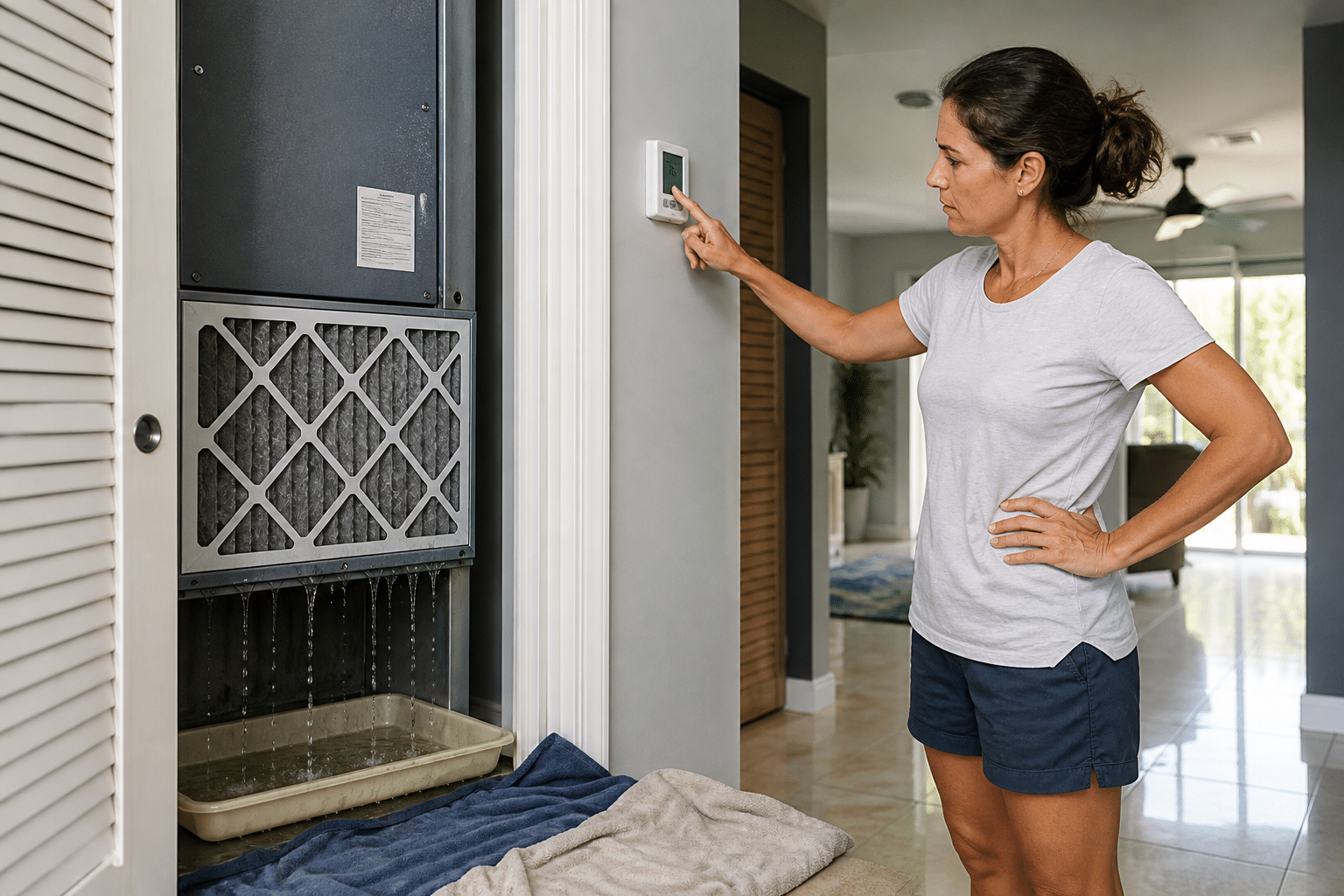
What is not expected is an indoor AC unit dripping water onto flooring, drywall, ceilings, furniture, or into an equipment closet. If you can see water outside the cabinet or pan, treat it as an active problem until proven otherwise.
Turn cooling off immediately if you notice any of these urgent conditions:
- Water near outlets, switches, thermostat wiring, controls, disconnect boxes, or the air handler cabinet
- Water coming through a ceiling, light fixture area, soffit, closet ceiling, or wall
- A burning smell, buzzing sound, or electrical odor
- A tripped breaker, repeatedly tripping breaker, or blank thermostat
- Rapidly spreading water, soaked insulation, or sagging drywall
- The AC has stopped running and you see water in or around the secondary drain pan
If your AC has a float switch or condensate safety switch, it may shut the system down when water backs up. That shutdown is protective. Do not bypass, tape down, disconnect, or “reset around” a safety switch just to get cooling back. The switch may be the only thing stopping a larger overflow.
What to Do Right Now If Your AC Is Leaking Indoors
If your air conditioner is leaking water indoors, start by turning cooling off, protecting the home from water damage, and checking only what you can see safely. Do not open sealed panels, touch wet wiring, or keep restarting the system if water continues to appear.
- Turn the thermostat to Off. Set the system to Off or Cool Off. If water is near electrical components, do not touch wet equipment. If it is safe to access the electrical panel without standing in water or touching wet surfaces, turn off the AC breaker.
- Protect floors, walls, and ceilings. Use towels, buckets, pans, or a wet/dry vacuum if the area is safe. Move rugs, boxes, furniture, and stored items away from the leak. Do not remove panels that expose wiring or refrigerant components.
- Look at the thermostat. Check whether the screen is blank, displaying an error, calling for cooling, or showing a service alert. If the system stopped on its own, a float switch may have shut it down because the drain pan or line is full.
- Check for obvious overflow. From a safe viewing angle, look for water around the air handler, beneath a closet unit, in a secondary pan, under a mini split head, or around a ceiling cassette. Do not reach into wet cabinets.
- Document what happened. Take photos of where the water appeared, the thermostat screen, the drain pan if visible, and any ice on the refrigerant line. Note whether the AC was cooling normally before the leak started.
If water is actively coming through a ceiling, spreading quickly, or touching electrical areas, stop troubleshooting and schedule HVAC service. In humid South Florida homes and other year-round cooling areas, an AC unit water leak can cause damage fast because the system may run for long cycles and produce a steady stream of condensate.
Why Is My AC Leaking Water Inside? Common Causes by Symptom
An AC unit water leak usually comes from a drainage, airflow, freezing, pump, pan, or installation issue. The safest homeowner approach is to identify the symptom, shut the system off if water is active, handle only basic checks, and call for repair when the cause is not obvious or the leak returns.
-
Likely cause: ac condensate drain clogged.
What you may notice: Water near the indoor air handler, a full drain pan, musty odors, gurgling near the drain, or repeated float switch shutdowns.
Safe homeowner action: Turn cooling off, dry visible water, and visually inspect the drain area if it is accessible. Avoid pouring harsh chemicals into the drain because they can damage components, create fumes, or fail to clear the blockage.
When to call: Call when the pan is full, the float switch has tripped, water returns after drying, or you cannot confirm the drain is flowing freely.
-
Likely cause: dirty filter or low airflow.
What you may notice: Weak airflow from vents, a dirty return filter, longer run times, uneven cooling, or the AC struggling to reach the thermostat setting.
Safe homeowner action: Replace a dirty filter with the correct size and type. Make sure return grilles and supply vents are not blocked by furniture, boxes, or rugs.
When to call: Call if the system has visible ice, leaks again, has poor airflow after a filter change, or the filter becomes unusually dirty quickly.
-
Likely cause: frozen evaporator coil thawing.
What you may notice: Ice on the refrigerant line, water appearing after the AC shuts off, reduced airflow, weak cooling, or a wet area under the indoor unit after the ice melts.
Safe homeowner action: Turn cooling off. You may set the fan to On only if the system manufacturer’s controls allow it and no water is near electrical components. Replace a dirty filter if needed.
When to call: Call if ice is present, returns, or is paired with weak cooling. Ice can point to airflow problems, refrigerant issues, or equipment faults that require professional diagnosis.
-
Likely cause: cracked, rusted, shifted, or overflowing drain pan.
What you may notice: Water under the air handler, stains around the equipment base, rust, visible cracks, or water spilling from a pan that is not level.
Safe homeowner action: Do not try to patch a primary pan inside the unit. Dry the area and take photos if the pan is visible without removing sealed panels.
When to call: Call if the pan is damaged, corroded, overflowing, or hard to access.
-
Likely cause: failed condensate pump.
What you may notice: Water collecting in a pump reservoir, the pump buzzing but not moving water, unusual silence from a pump that normally cycles, or the AC shutting off on a safety switch.
Safe homeowner action: Look and listen only if the pump is accessible and dry around the plug. Do not disassemble the pump or handle wet wiring.
When to call: Call if the pump is full, not running, buzzing, leaking, or repeatedly tripping the safety switch.
-
Likely cause: poor installation, slope, insulation, or drain routing.
What you may notice: A newer system leaks soon after installation, leaks during long humid days, or has recurring drainage problems even after clearing the line.
Safe homeowner action: Note when the leak happens and whether it occurs during heavy cooling demand.
When to call: Call if leaks repeat. Drain slope, trap design, equipment leveling, insulation, and venting should be checked by an HVAC technician.
How to Find Where the AC Water Is Coming From Safely
To find where an indoor AC unit is dripping water, start with where the water appears, then trace only visible, safe clues. Do not remove sealed covers, handle wet wiring, open refrigerant lines, or reach into the cabinet while the system is leaking.
Begin with the location of the water:
- Around the indoor air handler: Look for water at the base of the cabinet, near the drain line, or in the secondary pan below the unit.
- Under a closet unit: Check whether water is coming from the equipment platform, the return area, or the floor in front of the closet.
- Below an attic unit: Look for ceiling stains, dripping from a ceiling register area, or wet drywall beneath the equipment location. Do not climb into an attic if the area is unsafe or wet.
- Around a ceiling cassette: Watch for water along the cassette edge, on the ceiling tile, or dripping from one corner.
- Beneath a wall-mounted mini split: Check whether water is dripping from the bottom of the indoor head, running down the wall, or appearing near the line-set cover.
- Near a window unit or sleeve: Look for water entering at the interior sill, wall opening, or around a poorly sloped sleeve.
Next, check basic operating clues:
- Is the system still cooling? If the thermostat is calling for cooling but the unit is off, a float switch or safety device may have stopped operation.
- Is the filter dirty? A heavily clogged filter can reduce airflow and contribute to freezing or poor condensation management.
- Is there visible ice? Look at exposed refrigerant lines near the indoor unit. If you see frost or ice, turn cooling off and do not restart until the cause is addressed.
- Does a pan appear full? If the primary or secondary drain pan is visible from a safe angle and contains standing water, the drainage system may be backed up.
- Is there a condensate pump? If accessible, listen for unusual silence, constant buzzing, or short cycling. Do not open the pump, unplug wet equipment, or touch wiring in a wet area.
Use your findings to describe the problem clearly when scheduling service. For example: “The closet air handler shut off, the thermostat is blank, and the secondary pan has standing water,” or “The mini split is dripping from the lower right corner after running for several hours.” Specific symptoms help the technician arrive prepared.
Can You Keep Running an AC That Is Leaking Water? Safe DIY Steps and What to Avoid
You should not keep running an actively leaking AC. Continued operation is not recommended when water is spreading, recurring, near electrical components, coming through ceilings, associated with ice, paired with burning smells, or stopped by a condensate safety switch.
There is a narrow situation where a short, monitored restart may be reasonable: the area is fully dry, the only obvious issue was a dirty filter, the filter has been replaced, there is no visible ice, no full drain pan, no electrical concern, and no continued overflow. Even then, watch the system closely and shut it off again at the first sign of water.
Safe DIY steps include:
- Turn the thermostat to Off or Cool Off.
- Dry visible water if it is safe to do so.
- Move belongings away from the leak area.
- Replace a dirty air filter with the correct size.
- Remove obvious debris around the unit, return grille, or accessible drain area.
- Check thermostat messages, error codes, and whether the system shut itself down.
- Take photos and note when the leak occurs.
Avoid these common mistakes:
- Do not bypass a float switch. It is there to prevent overflow and property damage.
- Do not keep resetting the breaker. A tripping breaker or blank thermostat with water nearby can indicate an electrical safety issue.
- Do not pour harsh chemicals into the drain. They can damage drain materials, pans, pumps, or nearby components.
- Do not open sealed equipment panels. Wet wiring, blower components, and refrigerant parts are not safe DIY areas.
- Do not ignore recurring leaks. If the leak stops and comes back, the cause still needs to be found.
- Do not assume clear water is harmless. Even clean condensate can damage drywall, flooring, insulation, and cabinets.
For year-round cooling systems, especially in humid South Florida homes, a small condensate problem can become a repeat water damage issue. If the same drain, pan, pump, or indoor unit area leaks more than once, schedule service instead of relying on temporary cleanup.
AC Water Leak vs. Refrigerant Leak—and When to Call an HVAC Technician
A clear indoor water leak is usually a condensate drainage or airflow problem, not refrigerant leaking onto the floor. Refrigerant leaks more often show up as weak cooling, hissing sounds, ice formation, longer run times, or rising energy use rather than clear water pooling indoors.
An air conditioner leaking water can still be serious. Condensate may be plain water, but it can damage ceilings, flooring, baseboards, cabinets, and insulation. If the leak is near electrical components, the priority is safety, not continued cooling.
Call an HVAC technician when you notice any of the following:
- Water near electrical components, controls, wiring, outlets, or the air handler cabinet
- Water leaking through a ceiling, wall, soffit, or light fixture area
- The leak returns after drying the area and replacing a dirty filter
- The drain pan is cracked, rusted, shifted, overflowing, or difficult to access
- The condensate pump is full, buzzing, silent, leaking, or not moving water
- Ice is visible on the refrigerant line, coil area, or indoor equipment
- The thermostat is blank, the breaker trips, or the unit shuts down repeatedly
- You smell burning, hear buzzing, or see signs of electrical trouble
- The system is not cooling well, runs constantly, or leaks after long cooling cycles
- The leak is from a ceiling cassette, mini split head, attic unit, or hard-to-reach equipment
If you are asking, “why is my ac leaking?” and the answer is not obvious within a few safe checks, it is time for professional diagnosis. A technician can clear and test the condensate drain, inspect the pan, verify pump operation, check airflow, look for freezing causes, and confirm the system is safe to run.
Frequently Asked Questions
Is it normal to leak water from an AC indoor unit?
No. It is normal for an air conditioner to create condensate as it removes humidity, but that water should drain through the pan and condensate line. Visible dripping, pooling, ceiling stains, or water around the indoor unit is not normal.
How do you stop an AC unit from leaking inside?
Turn cooling off first. Dry the area if it is safe, replace a dirty filter, check for visible ice, look for a full drain pan, and do not bypass safety switches. If water continues or returns, schedule HVAC repair to address the drain, pan, pump, airflow, or freezing issue.
What should I check first when my air conditioner is leaking water?
Check safety first: water near electrical components, ceiling leaks, burning smells, or tripped breakers mean you should stop and call for help. If safe, check the thermostat, filter, visible drain pan, and whether the system has shut down on a float switch.
How do I find out where my AC is leaking?
Start where the water appears: around the air handler, under a closet unit, below an attic unit, around a ceiling cassette, beneath a mini split, or near a window unit sleeve. Then look for safe visible clues such as a dirty filter, ice, a full pan, or a pump problem.
Can a dirty air filter cause an indoor AC unit to drip water?
Yes. A dirty filter can restrict airflow, which may contribute to coil freezing. When that ice melts, water can overwhelm the normal drainage path and appear as an indoor AC unit dripping water. Replace the filter, but call for service if ice or leaking continues.
Is an AC water leak the same as a refrigerant leak?
No. An AC water leak is usually condensate that is not draining correctly. A refrigerant leak more often causes weak cooling, hissing, ice, long run times, or higher energy use. If you see ice or the system is not cooling well, schedule HVAC service.


Leave a Reply
Your email is safe with us.