AC Drain Line Issues Guide: Causes, Safe Fixes, and Maintenance Tips for Florida Homes
Quick Answer: What to Do If You Suspect an AC Drain Line Problem
Most AC drain line issues come from algae, slime, debris, poor drainage, or recurring setup problems that stop condensate from leaving the system. If you see water near the indoor unit, turn the AC off at the thermostat first, then check only visible, safely accessible drain parts before attempting anything more.
In humid Florida homes, an air conditioner can remove a lot of moisture from indoor air. That moisture has to drain somewhere. When the air conditioner drain line slows down or clogs, water may collect in the pan, trigger a float switch, leak around the indoor unit, or shut the system down.
Start with these safe first steps:
- Turn the AC off at the thermostat if water is around the indoor air handler, ceiling, closet, garage platform, or any electrical components.
- Look for standing water in the drain pan if it is visible and safely accessible.
- Inspect the visible PVC drain line for loose fittings, sagging sections, cracks, or obvious algae staining.
- Check the outdoor drain termination for mud, mulch, leaves, grass clippings, insects, or landscaping that may block discharge.
- Notice whether water is draining during a long cooling cycle, especially on hot, humid West Palm Beach afternoons.
Stop there if you are unsure what you are looking at. Do not pour harsh drain cleaners into the line, force wire into unknown piping, or keep resetting a tripped float switch. A float switch is warning you that water is backing up; bypassing or repeatedly resetting it can allow overflow damage to continue.
What Is an Air Conditioner Drain Line?
An air conditioner drain line is the pipe that carries water produced by your cooling system away from the indoor unit. As humid indoor air passes over the cold evaporator coil, moisture condenses into water, drops into a pan, and flows through the drain line to an outdoor discharge point or approved drain.
This drainage system is small, but it does important work every time your AC runs. In South Florida, where the cooling season is long and humidity is high, the condensate line may carry water for many hours a day. That makes routine AC drain line maintenance more important than many homeowners realize.
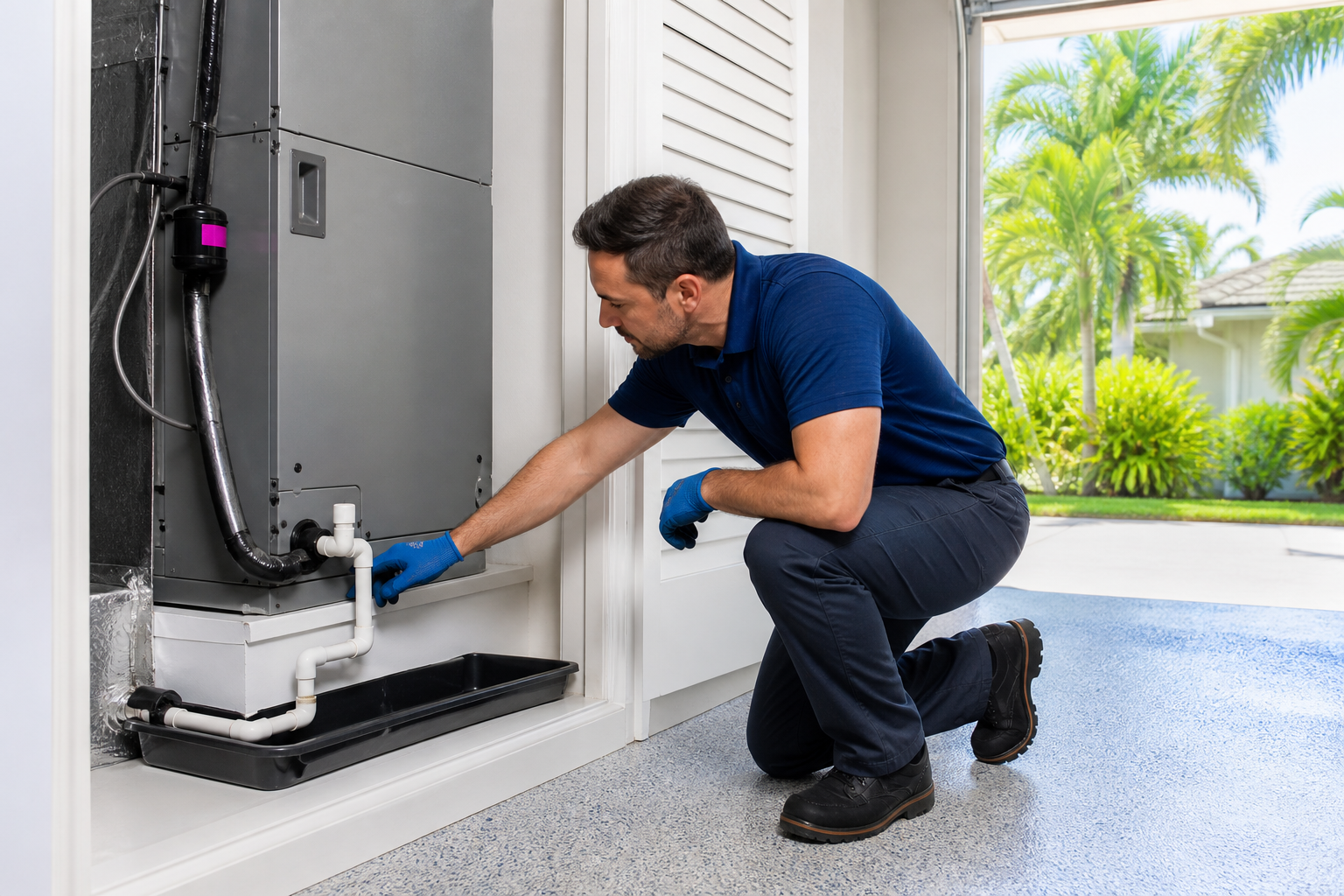
The basic parts include:
- Evaporator coil: The cold indoor coil that removes heat and moisture from the air.
- Condensate pan: The pan under the coil that catches water as it drips off the coil.
- PVC drain line: The pipe that carries condensate away from the air handler.
- Cleanout access: A capped or open access point used for flushing, clearing, or inspecting the line when properly configured.
- Termination point: The place where the drain line releases water, often outside near the home’s exterior wall.
- Float switch: A safety device that can shut the system off when water rises too high in the pan or drain assembly.
The process is simple:
- Humid indoor air moves across the cold evaporator coil.
- Moisture in the air forms water droplets on the coil.
- The water drips into the condensate pan.
- The pan directs water into the condensate drain line.
- The drain line carries it outside or to an approved plumbing drain.
When this process works correctly, you may see water dripping from the outdoor drain outlet during normal operation. That is usually expected in Palm Beach County’s humid climate. Problems begin when the water slows, stops, backs up, or appears somewhere it should not.
Common AC Condensate Drain Problems and Why They Happen
Most AC condensate drain problems happen when water cannot move freely through the line. The cause may be algae buildup, dust, sediment, a blocked outlet, poor pipe slope, damaged PVC, pan debris, trap problems, or a float switch responding to rising water. The symptom may look simple, but the cause is not always at the outlet.
The most common restriction inside a condensate line is buildup. Because the line stays damp, algae and slime-like biofilm can grow inside it. Dust from the air handler, sediment, insulation particles, and rust from an aging pan can collect in that damp material. Over time, the opening narrows until water drains slowly or stops altogether.
Common buildup causes include:
- Algae and slime: Damp, dark piping can encourage growth, especially during long cooling cycles.
- Dust and sediment: Particles from the indoor system can wash into the pan and line.
- Insulation debris: Loose material around the air handler may enter the pan or drain opening.
- Rust flakes: Older metal drain pans can deteriorate and shed debris into the drainage path.
- Outdoor debris: Mud, mulch, grass, and insects can block the termination point from the outside.
Physical drainage issues can create the same symptoms as a clog. A PVC line that sags may hold water and collect debris. A line with poor pitch may not drain by gravity. A cracked, disconnected, or poorly supported pipe can leak into walls, closets, garages, or attic spaces. If the system has a trap or venting problem, drainage may be inconsistent even after a visible clog is removed.
Watch for these setup-related problems:
- Blocked outdoor outlet: The line may be clear inside but plugged at the end by landscaping or soil.
- Sagging PVC: Low spots can hold water and encourage buildup.
- Poor pitch: A drain line that does not slope properly may move water too slowly.
- Cracked or disconnected pipe: Water may leak before it reaches the termination point.
- Trap or venting problems: Improper configuration can interfere with steady drainage.
- Missing or dirty cleanout: Without good access, clearing and maintaining the line becomes harder.
A tripped float switch deserves special attention. It is not the problem itself; it is a safety response. The switch is doing its job by stopping cooling when water gets too high. If the system shuts off repeatedly, the underlying drain issue still needs diagnosis. Resetting the switch without correcting the backup can lead to more water damage.
Normal Condensation vs. a Drain Line Issue: Homeowner Diagnostic Table
Some AC drainage is normal, especially during humid Florida weather. The key is where the water appears, how much is present, and whether the system keeps shutting down. Use this homeowner diagnostic guide to decide whether you are seeing normal condensate, a maintenance concern, or a likely clogged AC drain line.
Small amount of water at the outdoor drain
- What it usually means: Normal condensate discharge during cooling.
- Homeowner action: Keep the outlet clear of mulch, soil, weeds, and insects.
- When to call a pro: Call if water also appears near the indoor unit or the outlet constantly clogs.
Slow dripping from the drain outlet
- What it usually means: Could be normal during light cooling, or it may indicate a developing restriction during heavy use.
- Homeowner action: Compare drainage during a longer cooling cycle and check for visible debris at the outlet.
- When to call a pro: Call if the drain pan begins filling or dripping slows dramatically during humid weather.
No drainage during heavy AC use
- What it usually means: The line may be clogged, disconnected, improperly pitched, or draining somewhere you cannot see.
- Homeowner action: Turn the system off if water is present indoors and inspect only visible, safe areas.
- When to call a pro: Call promptly if the AC has been running hard and no condensate appears at the expected outlet.
Full drain pan
- What it usually means: Water is backing up or not leaving the pan fast enough.
- Homeowner action: Shut the AC off at the thermostat to reduce overflow risk.
- When to call a pro: Call before restarting if the pan is full, leaking, rusty, or near electrical parts.
Recurring shutdowns
- What it usually means: A float switch may be stopping the system because water is rising.
- Homeowner action: Do not keep resetting the system without finding the cause.
- When to call a pro: Call if the system shuts off again after the pan or outlet appears clear.
Repeated clogs
- What it usually means: There may be heavy microbial buildup, poor pipe slope, trap problems, missing cleanout access, or recurring debris entering the line.
- Homeowner action: Keep the outlet clear and note how often the issue returns.
- When to call a pro: Call if clogs return more than once, especially during peak summer cooling season.
Water returning after vacuuming
- What it usually means: The blockage may be deeper in the line, the pipe may be poorly configured, or the pan may be collecting debris.
- Homeowner action: Stop repeated DIY attempts if water backs up again.
- When to call a pro: Call for diagnosis of the full condensate path, not just the outdoor outlet.
How to Unclog an AC Drain Line Safely
Homeowners may be able to clear a minor blockage at the outdoor drain outlet, but safe limits matter. Stop if the line is inaccessible, water is near electrical parts, the air handler is in an attic or tight closet, the system keeps tripping, or the blockage returns after a basic cleaning attempt.
Before you try to unclog an AC drain line, turn cooling off at the thermostat. If you see water near wiring, switches, panels, or the indoor air handler cabinet, do not open equipment or reach into the area. Wait for a qualified HVAC technician.
Use this safe DIY checklist for minor, visible restrictions:
- Turn the system off at the thermostat. This helps reduce additional condensate while you inspect.
- Locate the condensate drain line. Look for the PVC line near the indoor air handler and the outdoor termination point.
- Inspect the drain pan if safely accessible. Look for standing water, rust, sludge, or debris without touching electrical components.
- Check the outdoor outlet. Remove leaves, mud, mulch, grass clippings, or insect nests from around the pipe opening.
- Use a wet/dry vacuum if appropriate. Place the hose over the outdoor termination to pull out loose blockage.
- Confirm drainage. After clearing visible debris, look for water movement before restarting the system.
A wet/dry vacuum can help when the clog is loose and close enough to the outdoor termination. It is not a guaranteed fix. If the vacuum pulls out sludge and the system drains normally afterward, monitor it closely over the next few cooling cycles. If the pan refills or the float switch trips again, the problem is likely deeper than a simple outlet blockage.
Avoid these unsafe shortcuts:
- Do not use harsh drain cleaners. They can damage materials, create fumes, and introduce chemicals near HVAC components or plumbing connections.
- Do not use high-pressure air. Excess pressure can separate fittings, damage pans, or push debris into a worse location.
- Do not force wire or tools into unknown piping. Condensate lines may connect near pans, pumps, seals, traps, or plumbing materials that can be damaged.
- Do not bypass the float switch. It is there to reduce overflow risk.
- Do not keep running the AC with a full pan. More condensate can mean more water damage.
If your air handler is in an attic, above a finished ceiling, or in a cramped closet, be more cautious. A small overflow can stain drywall, damage insulation, or affect nearby electrical components. In those locations, professional service is often the safer and less expensive choice compared with repeated trial-and-error clearing.
AC Drain Line Maintenance for Humid Florida Homes
AC drain line maintenance should be proactive in West Palm Beach and surrounding Palm Beach County because humidity keeps condensate systems busy. More moisture removal means more water flowing through the pan and line, while damp conditions can encourage algae and slime buildup inside the drain.
Homeowners can help by checking visible drainage areas regularly, especially before and during peak cooling season. These checks do not replace professional maintenance, but they can catch slow drainage before it turns into a leak or shutdown.
Use this simple homeowner maintenance checklist:
- Look at the outdoor drain outlet monthly during heavy cooling season to make sure it is not buried, blocked, or surrounded by mud.
- Trim grass and landscaping away from the discharge point so water can exit freely.
- Watch for reduced dripping during long cooling cycles when the system should be removing moisture.
- Check around the indoor unit for water stains, musty odors, damp flooring, or a full secondary pan.
- Listen for repeated starts and stops that may suggest a float switch is interrupting operation.
Before the hottest, most humid part of the year, schedule professional AC maintenance that includes the condensate system. A technician can flush or clear the drain line, inspect the pan, confirm discharge, test the float switch, and look for signs of recurring restriction.
Recurring clogs should not be treated as endless DIY vacuuming. If the problem keeps returning, the issue may involve more than slime at the outlet. A professional can evaluate pipe pitch, trap configuration, cleanout access, microbial buildup, pan deterioration, outlet routing, and line support. Those details matter in Florida homes where the AC may run nearly every day for much of the year.
For property managers, seasonal drain line care is especially important. A clogged drain in a tenant-occupied condo, townhome, or rental house can quickly become a ceiling stain, emergency service call, or indoor comfort complaint. Adding condensate drain checks to routine HVAC service helps reduce surprise shutdowns during high-demand summer weather.
When to Call an HVAC Professional for AC Condensate Drain Problems
A drain line issues guide can help you spot warning signs and handle basic maintenance, but some AC condensate drain problems need professional attention. In humid South Florida, your air conditioner may remove a large amount of moisture from the air every day. That means the drain line, drain pan, float switch, and air handler all need to work correctly to keep water moving safely out of your home.
Call an HVAC professional if the problem affects system operation, keeps coming back, or creates a risk of water damage. Condensate overflow can damage ceilings, walls, flooring, insulation, air handler components, and nearby electrical parts, especially when the air handler is installed above living areas.
Call for Service If the System Shuts Off or the Float Switch Trips
Many modern systems have a float switch that shuts the AC off when water backs up in the drain pan or safety pan. This is a protective feature, not the main problem. If your AC stops running and you find standing water near the indoor unit, the float switch may be doing its job by preventing an overflow.
Schedule service if you notice any of these signs:
- The thermostat is calling for cooling, but the indoor or outdoor unit will not run.
- The drain pan is full or nearly full.
- The float switch has tripped more than once.
- You clear the line, but the system shuts off again later.
- Water is collecting around the air handler, closet, garage unit, or attic unit.
Do not bypass the float switch to force the AC to run. That can turn a drainage problem into a water damage problem. A technician can clear the blockage, test the safety switch, inspect the pan, and confirm that the drain line is pitched and flowing properly.
Call If Water Reappears After You Clear the Line
If you use a wet/dry vacuum or safe drain maintenance method and water returns shortly afterward, the clog may not be fully removed. Slime, algae, dirt, insulation debris, or buildup inside a long drain run can break loose in pieces and clog the line again downstream.
Recurring backups are common in West Palm Beach and surrounding Palm Beach County because AC systems run for long cooling seasons and pull heavy humidity from the air. More runtime means more condensate. More condensate means the drain system has more opportunity to grow algae and form sludge.
Professional service is the safer next step when:
- The drain clears temporarily, then backs up again within days or weeks.
- You hear gurgling from the drain line.
- The drain outlet outside has little or no water flow while the AC is running.
- The indoor unit shows signs of moisture, rust, staining, or biological buildup.
- You have to vacuum the line often to keep the system running.
A technician can inspect the full condensate path, not just the visible opening. They can also check whether the issue is caused by poor drain slope, a missing trap, a blocked vent, an undersized drain, or an installation problem.
Call If the Air Handler Is in a High-Risk Location
Drain line problems are more urgent when the air handler is located where overflow can spread quickly or stay hidden. An attic air handler, ceiling-mounted unit, hallway closet, or second-floor mechanical space can create a bigger risk than a garage unit on a concrete slab.
Call a professional promptly if your indoor unit is located in or above:
- An attic over finished rooms
- A ceiling or soffit space
- A hallway closet near wood flooring or carpet
- A second-floor utility area
- A condo mechanical closet near neighboring units
- An area with nearby electrical panels, outlets, or low-voltage controls
In these locations, even a slow overflow can affect drywall, baseboards, insulation, flooring, and ceilings before you notice a major leak. If you see water staining, sagging drywall, dripping from a ceiling, or moisture near electrical components, turn the system off and schedule service.
Call If You Suspect Damaged Parts or an Inaccessible Drain Line
Not every condensate problem is a simple clog. Sometimes the issue is a cracked PVC fitting, a rusted pan, a loose drain connection, or a line that was installed without an accessible cleanout. These problems are harder to fix safely without the right tools and HVAC experience.
Schedule a professional inspection if you notice or suspect:
- Cracked, loose, or separated PVC drain piping
- A rusted, deteriorated, or overflowing drain pan
- No visible drain outlet outside the home
- No accessible cleanout or service port
- A drain line route that disappears into walls, ceilings, or slab areas
- Water dripping from the air handler cabinet instead of the drain outlet
- Moldy odors, staining, or wet insulation near the unit
These situations call for diagnosis, not guesswork. A professional can determine whether the system needs drain cleaning, pan repair, PVC correction, float switch service, or changes to improve access for future AC drain line maintenance.
Service-Decision Checklist for Homeowners
Use this quick checklist when deciding whether to keep troubleshooting or schedule HVAC service:
- Call now if the AC has shut off and the float switch or safety pan has water in it.
- Call now if water is dripping from a ceiling, attic, closet, or indoor air handler.
- Call soon if the line clogs repeatedly, even after vacuuming or flushing.
- Call soon if you cannot find the cleanout, outlet, or safe access point.
- Call soon if the drain pan is rusty, cracked, or holding standing water.
- Call for preventive service if your home is in a high-humidity area and the drain line has not been cleaned this cooling season.
For many Florida homes, preventive drain line service is a practical part of seasonal AC maintenance. If your system runs heavily through spring, summer, and fall, a technician can clean the line, test drainage, inspect the pan, and confirm the float switch is ready before peak humidity puts extra strain on the system.
FAQ: AC Drain Line Issues
What is an AC drain line and why does it clog?
An AC drain line carries condensation from the indoor air handler to a safe drain location, often outside the home. It clogs when algae, slime, dust, dirt, insulation particles, or debris build up inside the pipe. In humid areas like West Palm Beach and Palm Beach County, air conditioners remove more moisture, so the drain line stays active for longer periods and may develop buildup faster.
How do I know if my AC condensate drain line has a problem?
Common signs include water around the indoor unit, a full drain pan, musty odors, ceiling stains near an attic unit, weak or no drainage from the outside outlet, or an AC system that shuts off unexpectedly. If your float switch trips, that often means water is backing up where it should not be.
Can I unclog my AC drain line myself?
You may be able to handle a minor clog if the cleanout and outdoor drain outlet are easy to access. Many homeowners use a wet/dry vacuum at the outside drain outlet or perform a gentle flush from an accessible cleanout. Stop and call a professional if the air handler is in an attic or ceiling, the pan is full, water returns quickly, or you are unsure where the line runs.
What can I pour in my AC drain line?
Use only products or solutions that are safe for your specific HVAC system and drain materials. Many homeowners use warm water for routine flushing, and some use manufacturer-approved drain line tablets or treatments. Avoid harsh chemicals unless your HVAC professional specifically recommends them, because they can damage components, create fumes, or affect PVC and drain pan materials.
How often should an AC drain line be cleaned in Florida?
In Florida’s humid climate, many homes benefit from drain line cleaning at least once or twice a year as part of AC maintenance. Homes with heavy AC use, attic air handlers, previous clogs, or recurring algae buildup may need more frequent attention. Your technician can recommend an interval based on your equipment, drain layout, and past service history.
Why does my AC drain line keep clogging after I clear it?
Repeated clogs may mean buildup remains deeper in the line, the pipe slope is poor, the drain is missing proper venting or trapping, or debris is entering from the air handler area. It can also happen when the drain pan is deteriorating or the line route is long and hard to flush completely. If a clogged AC drain line keeps coming back, professional diagnosis is the safest next step.


Leave a reply